Chemical Analysis of Fossil Teeth Indicates Cretaceous Dinosaurs Consumed Marine Resources
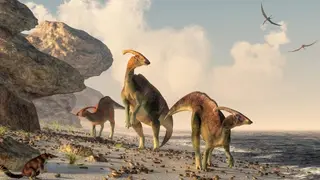
Researchers examining chemical signatures in fossil teeth from Cretaceous-era animals discovered evidence that dinosaurs and other coastal creatures supplemented their diets with ocean-derived food sources including seaweed. The study analyzed carbon isotope ratios preserved in teeth and bones from dinosaurs, crocodiles, turtles, and fish found in ancient North American coastlines, revealing how marine resources were incorporated throughout coastal food webs. This phenomenon, known as marine subsidization, suggests that coastal dinosaurs adapted to dietary variations much like modern animals do today.
Scientists studying ancient North American fossil sites discovered that Cretaceous coastal animals incorporated ocean-sourced nutrients into their bodies, a process mirroring modern ecosystems. The research relied on examining carbon isotope ratios—the proportions of different carbon atoms—trapped within tooth enamel. These chemical markers accumulate as animals consume food and move through the food chain, creating a measurable signature of dietary origins.
The investigation compared fossils from three distinct environmental settings: regions bordering the Western Interior Seaway (an ancient inland ocean), coastlines along the ancestral Gulf of Mexico, and landlocked territories. By analyzing tooth samples from multiple species including dinosaurs, crocodilians, turtles, and fish across these locations, researchers identified notably different isotope patterns between coastal and interior populations, suggesting marine resource dependence varied by geography.
This research could refine paleontological understanding of how ancient ecosystems functioned and may influence educational materials about dinosaur behavior and adaptation. The findings might engage broader audiences interested in environmental resilience and species flexibility. For scientific fields studying climate change impacts, the work could provide historical perspective on how organisms respond to resource constraints. Museums may incorporate these discoveries into exhibits, potentially affecting public engagement with paleontology, though the practical applications remain primarily academic and educational.