Molecular Evidence Pushes Back Animal Evolution to 635 Million Years Ago
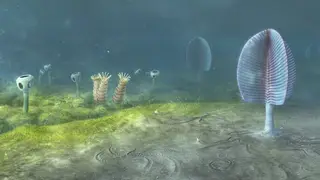
Researchers examining molecular clocks and chemical biomarkers suggest animals, particularly sponges, existed during the Cryogenian period over 635 million years ago, significantly earlier than the oldest body fossils from 574 million years ago. Chemical traces called lipid biomarkers preserved in ancient rocks indicate animal presence long before unambiguous fossil evidence appears in the geological record. The study highlights how absence of fossils does not necessarily mean animals had not yet evolved, challenging traditional dating methods for animal origins.
Scientists have long debated when animals first appeared on Earth, with a gap between the fossil record and chemical evidence creating uncertainty. Traditional fossils show animals emerging around 574 million years ago, yet molecular analysis of genetic divergence between modern species suggests earlier origins. Chemical compounds called lipid biomarkers discovered in ancient rocks point to sponge presence during an earlier geological period, pushing potential animal emergence back roughly 60 million years.
The Virginia Tech research team identified a critical flaw in how scientists have used fossil assemblages to set dating boundaries. By comparing two similar microfossil collections from different time periods—one from Mongolia and one from China—they demonstrated that exceptional fossil preservation does not guarantee all organisms present will fossilize. This means the absence of animal fossils in older rocks may reflect taphonomic conditions rather than evolutionary timing.
This research could reshape understanding of early life's evolutionary timeline, affecting how paleontologists interpret the fossil record and calibrate molecular clocks. Museum curators and textbook publishers may need to update educational materials about animal origins. The findings may also influence how scientists evaluate evidence in other evolutionary questions where fossil gaps exist, potentially leading to broader reassessment of divergence dates across various species groups. Ultimately, the work demonstrates how combining multiple evidence types—fossils, chemistry, and genetics—provides more reliable historical reconstruction than any single method alone.