Roman Space Telescope Achieves Precision Pointing Tests and First Light with Coronagraph Instrument
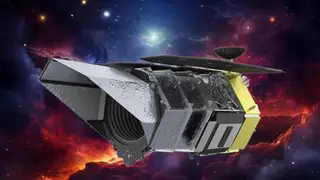
NASA's Nancy Grace Roman Space Telescope successfully completed critical guidance system tests between September 15-21, demonstrating its ability to maintain extraordinary pointing stability for extended observations of distant celestial objects. On September 22, the mission's Coronagraph Instrument detected cosmic light for the first time, marking a significant milestone in the telescope's commissioning process. The fine guidance system, which uses 18 detectors to monitor guide stars and correct any spacecraft drift, will be essential for the telescope's ability to image and characterize exoplanets in future observations.
The Roman telescope's fine guidance system represents a substantial engineering achievement, utilizing an array of 18 detectors embedded within its primary imaging instrument to continuously monitor reference stars and compensate for any spacecraft movement. Operating at a precision level that enables the observatory to maintain stability better than one hundred-thousandth of a degree over extended periods, this system performs corrective adjustments approximately four times per second to counteract drift.
Beyond its current capabilities, the mission team plans to implement an innovative spectral-based guiding technique, leveraging the telescope's existing spectroscopic measurement equipment to enhance pointing accuracy further. This approach distinguishes Roman from other space observatories that rely on dedicated guider instruments, potentially advancing the field's technological standards for future missions.
These milestones could accelerate the timeline for discovering and characterizing exoplanets and circumstellar dust structures, potentially advancing humanity's understanding of planetary systems beyond our own. The validation of Roman's precision guidance and coronagraph technology may inform engineering approaches for subsequent generations of space-based observatories. Success in these early stages could also influence funding and priority decisions for related astronomical research programs in coming years.