Astronomers Discover Evidence of Second-Generation Planet Around White Dwarf Star
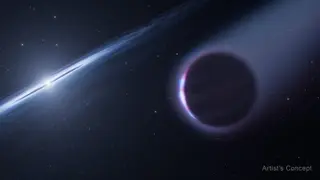
Researchers using NASA's Hubble Space Telescope data have identified chemical evidence suggesting that a white dwarf star designated HS 0209+0832 may harbor a second-generation planet. Unlike planets that form with their parent star, this potential planet would have formed from material ejected during the star's death, giving it a distinctly different chemical composition. The discovery represents a significant finding about planetary formation and evolution around stellar remnants.
Astronomers have identified compelling chemical signatures in observations of white dwarf HS 0209+0832 that suggest an unusual planetary companion. White dwarfs represent the final evolutionary stage of stars like our Sun—dense remnants left behind after a star exhausts its fuel and sheds its outer layers into space.
What makes this discovery particularly intriguing is the planet's apparent origin. Rather than forming alongside its star during the system's initial development, this world may have coalesced from the stellar material released during the white dwarf's death throes. This fundamentally different formation pathway would produce a planet with a markedly distinct chemical makeup compared to conventionally formed planets.
This discovery could reshape scientific understanding of planetary formation across diverse stellar environments and the persistence of planetary systems through dramatic stellar transformations. For astronomers and planetary scientists, the findings may inform models of how planets survive and emerge around stellar remnants. The research might also broaden the search for exoplanets to include previously underexplored stellar environments, potentially expanding the known inventory of worlds in the galaxy.