Identity Security Platform Aembit Launches Controls for Personal AI Agents in Enterprise Settings
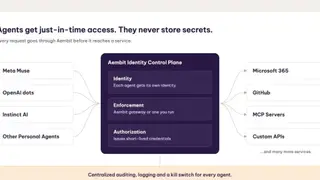
Aembit has introduced new capabilities to secure personal AI agents like Meta Muse and OpenAI Dots accessing enterprise systems through employee credentials. The platform creates blended identities combining agent and employee identity to control access, issue short-lived credentials, and maintain audit trails. The move addresses emerging security risks as consumer AI agents proliferate in workplace environments.
Personal artificial intelligence assistants have begun infiltrating workplace environments as employees adopt consumer tools to improve productivity. These agents, such as those developed by Meta and OpenAI, can leverage employee login credentials to access sensitive corporate resources including email systems, code repositories, and internal applications. This creates a security blind spot where credential storage and agent activities occur outside traditional IT oversight, potentially enabling data breaches or unauthorized system modifications that remain difficult to trace.
Aembit's solution separates agent identity from employee identity within its access control framework. By issuing temporary credentials specific to each agent request and maintaining centralized activity logs, the platform enables security teams to monitor, restrict, and disable individual agents without affecting employee access. The capability is now available at no extra cost to current Aembit customers and supports multiple AI platforms beyond the initially announced Meta and OpenAI products.
This development could reshape enterprise security practices as AI agent adoption accelerates. Organizations may face increased complexity managing credentials and access permissions across both human employees and autonomous systems, potentially requiring new security policies and governance structures. Conversely, the availability of control mechanisms like Aembit's may help enterprises adopt AI productivity tools more confidently by reducing insider threat risks and data exposure vulnerabilities. The outcome may depend significantly on how widely such security controls achieve adoption across enterprises of varying sizes and technical sophistication.