New Open-Source Gateway Secures AI Agent Credentials in Centralized Vault
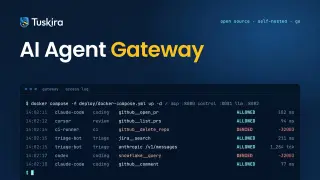
Tuskira released an open-source AI Agent Gateway that acts as a security intermediary between AI agents and their connected services, preventing credentials from being scattered across multiple agent configurations. The gateway enforces access controls at runtime, checking permissions before exposing real credentials to agents and supporting integration with popular AI platforms like Claude, OpenAI, and Gemini. It also tracks token usage and costs across all agent calls while storing logs and request data for audit and debugging purposes.
AI systems increasingly operate across multiple platforms and services, creating complexity in how access credentials are managed. Tuskira's gateway consolidates this management by acting as a single security checkpoint, eliminating the need to distribute sensitive keys across numerous agent configurations. The tool enforces permission checks at runtime, meaning access decisions happen each time an agent makes a request rather than relying on pre-configured permissions that may become outdated or improperly scoped.
Beyond credential storage, the gateway provides operational visibility through comprehensive logging and cost tracking. Organizations running multiple AI agents can monitor token consumption and estimated expenses across all agent activities, while maintaining detailed records of requests and responses for compliance and troubleshooting purposes.
This tool may help development teams reduce security risks associated with distributed credential management, particularly in environments where AI agents operate across CI/CD pipelines and local developer machines. Organizations deploying multiple AI agents could benefit from centralized access controls and audit trails. However, adoption depends on whether teams prioritize this additional infrastructure layer against the complexity it introduces. The broader impact hinges on how widely AI agent deployment becomes standard practice in enterprise workflows.