AppViewX Expands Agent Identity Platform with Detection for Unauthorized AI and Quantum-Resistant Security
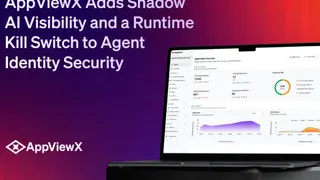
Identity security vendor AppViewX has enhanced its Agent Identity Security solution with capabilities to discover unauthorized AI agents, enforce real-time access controls, and issue quantum-resistant cryptographic identities. The expansion addresses the growing challenge of controlling AI agent proliferation across enterprise systems as agents operate autonomously or on behalf of employees. Organizations can now govern AI agent posture, maintain audit logs, and terminate rogue agents without affecting human user access.
AppViewX's enhancement targets a fundamental shift in enterprise security architecture driven by AI proliferation. The company's approach treats agent management as an identity problem requiring specialized solutions rather than adapting existing human-focused frameworks. The addition of quantum-resistant cryptography reflects growing organizational preparation for computational advances that could compromise current encryption standards. By combining endpoint detection with API integrations across multiple platforms—EDR, SaaS, and cloud services—the solution attempts to close visibility gaps where unauthorized agents might otherwise operate undetected. The inclusion of just-in-time access controls and runtime termination capabilities aims to reduce both the window of vulnerability and collateral damage from security incidents.
Organizations adopting autonomous AI agents across operations may face new security governance challenges. The ability to discover and control shadow AI could prevent credential exposure and unauthorized system access, potentially reducing breach surfaces. However, implementation complexity and false positives in detection systems could burden security teams. The quantum-resistant identity layer may prove strategically important as computational threats evolve, though its practical necessity remains uncertain given the timeline for quantum capability maturation. How effectively enterprises adopt and maintain these controls at scale could significantly influence whether AI agent deployment becomes a manageable security practice or an expanding vulnerability vector.