Supreme Court weighs judicial authority to review constitutional claims in veterans benefits disputes
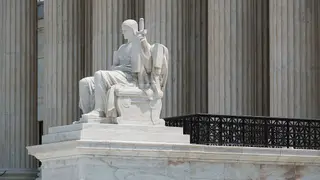
The Supreme Court examined whether federal district courts can hear constitutional challenges to veterans' benefits laws during oral arguments in Johnson v. United States Congress, a case involving a veteran's challenge to a statute capping disability payments for incarcerated veterans. The case revisits questions the Court addressed over 50 years ago in Johnson v. Robison, which established that constitutional challenges could proceed despite statutory language restricting judicial review of benefits determinations. The justices appeared divided on how to apply precedent to the current statutory framework governing veterans' benefits appeals.
The Supreme Court is reconsidering a legal principle established over five decades ago regarding veterans' access to federal courts. In 1975, the justices ruled 8-1 that broad statutory language preventing judicial review did not bar constitutional challenges to benefits laws. The current dispute involves Floyd Johnson, a veteran challenging a provision that reduces disability payments for incarcerated veterans. The core question is whether updated statutory language in the Veterans' Judicial Review Act maintains the same protection for constitutional claims or whether it operates differently under its more narrowly tailored review restrictions.
The case exposes tension between two interpretive approaches. Johnson's legal team argues that constitutional challenges to statutes themselves differ fundamentally from challenges to how agencies apply those laws, justifying district court review. Government lawyers and several justices, however, questioned whether this distinction is workable or justified by the statute's language, suggesting the Court may struggle to articulate clear boundaries for when courts can bypass the VA's established appeals process.
The decision could significantly affect veterans' ability to challenge disability laws in federal court. If the Court sides with Johnson, disabled veterans facing statutory caps on benefits would retain direct access to district courts for constitutional claims. Conversely, a ruling for the government might channel such challenges exclusively through the VA's appeals system, potentially limiting judicial scrutiny of congressional disability statutes. The outcome may reshape how constitutional protections apply across the entire veterans' benefits system affecting hundreds of thousands of recipients.