Russia Conducts Massive Multi-Weapon Attack Targeting Ukrainian Defense Production
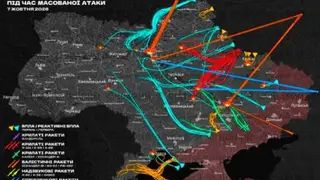
Russian forces executed a large coordinated assault on October 6-7 utilizing approximately 75 missiles of various types along with 130 drones against Ukrainian military-industrial and energy targets across seven regions. The strike specifically focused on disrupting production facilities for Ukraine's FP-5 Flamingo cruise missiles and other weapons systems, including factories in Kyiv and surrounding areas. Key energy infrastructure including the Trypillia Thermal Power Plant was also damaged during the operation.
The October 6-7 operation represents a significant escalation in Russia's targeting strategy, shifting emphasis from general infrastructure toward Ukraine's domestic weapons manufacturing capacity. The coordinated assault leveraged multiple missile platforms—including Iskander-M ballistic systems, Kalibr cruise missiles, and newer Zircon anti-ship variants—alongside over 100 unmanned aerial systems to overwhelm Ukrainian air defenses across a seven-region footprint. The systematic focus on facilities allegedly producing the FP-5 Flamingo cruise missile and related drone components suggests Russian efforts to disrupt Ukraine's ability to sustain advanced domestic weapons production and reduce reliance on foreign military aid.
Energy infrastructure suffered collateral damage, with the Trypillia Thermal Power Plant struck for a second time in one week, potentially degrading electricity supplies to military-industrial zones. The breadth of targeted facilities—spanning assembly plants, component manufacturers, and logistics hubs across Kyiv, Chernihiv, Dnipropetrovsk, and other regions—indicates a comprehensive attempt to fragment Ukraine's production networks rather than concentrate strikes on single locations.
The attack may significantly impact Ukraine's capacity to maintain and replace advanced weaponry without increased external resupply, potentially affecting military operations in coming months. Civilian populations could face extended power shortages from damaged thermal generation capacity, affecting hospitals, water systems, and heating as winter approaches. Russia's demonstrated ability to conduct coordinated multi-domain strikes of this scale may influence NATO assessments of air defense requirements and force posture commitments, while Ukrainian defense planners may need to further disperse or conceal production facilities to maintain operational sustainability.