SpaceX's Starship Completes Historic First Orbital Mission with Satellite Deployment
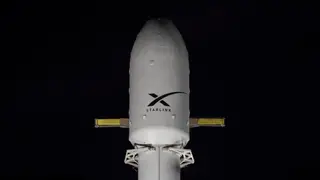
SpaceX's Starship achieved orbit for the first time on September 28, successfully deploying 26 next-generation Starlink V3 satellites into low Earth orbit. The milestone flight marked the completion of a full orbital insertion and payload deployment after multiple developmental attempts. The week saw four consecutive SpaceX launches, including the first Falcon Heavy mission for the National Reconnaissance Office.
SpaceX's achievement marks a turning point for the Starship program after numerous developmental setbacks. The ability to reach orbit and successfully deploy cargo opens pathways for the company's broader ambitions in heavy-lift launch services. The Starlink V3 satellites now in orbit represent an evolution in the constellation's capabilities, featuring larger dimensions and advanced technology including direct-to-cell communication features and improved laser interconnection systems for inter-satellite links.
This week's launch activity underscores SpaceX's expanding commercial reach beyond satellite deployment. The National Reconnaissance Office's decision to use Falcon Heavy signals growing confidence in commercial providers for national security missions, while the company's ability to execute four successful launches within seven days demonstrates operational maturity in launch cadence and execution.
Starship's orbital capability could significantly reshape space access economics and enable new classes of missions requiring heavy-lift capacity. The successful deployment of advanced Starlink satellites may accelerate global broadband coverage expansion, potentially affecting telecommunications infrastructure investment and rural connectivity initiatives. Meanwhile, the NRO's adoption of commercial heavy-lift services could influence how government space programs allocate resources and partner with private industry, though long-term implications depend on sustained reliability and cost advantages over time.