SpaceX Releases Images of Starlink V3 Deployment from Starship's Maiden Orbital Mission
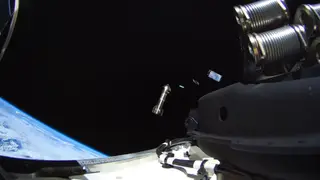
SpaceX's Starship completed its debut orbital flight on September 28, successfully deploying 26 Starlink V3 satellites approximately 25 minutes after launch from Starbase, Texas. The new V3 satellites will deliver over 100 times the bandwidth of existing Starlink satellites and add 26 Tbps of capacity to the constellation, roughly ten times greater than a single V2 launch on Falcon 9. Three satellites were equipped with cameras to document the upper stage's heatshield performance in the space environment.
SpaceX's Starship successfully entered orbit for the first time during this test flight, marking a major milestone in the vehicle's development. The upper stage completed its primary objective by releasing 26 next-generation satellites designed to dramatically improve global internet coverage. The new Starlink V3 satellites represent a substantial technological leap, offering capabilities that vastly exceed previous generations and enabling the constellation to deliver significantly more data capacity to end users worldwide.
During ascent, the mission encountered multiple engine challenges on both the booster and upper stage. Despite these complications, flight controllers adapted their approach, adjusting burn sequences and mission parameters to safely achieve orbit and complete the satellite deployment. Three satellites were equipped with specialized cameras to gather valuable telemetry about how the upper stage's thermal protection system performs in the space environment, providing data to inform future design refinements.
The successful deployment of V3 satellites could accelerate global broadband availability, potentially affecting rural and underserved communities seeking internet access. The demonstrated capacity improvements may influence competition in the satellite communications market. However, the repeated engine issues suggest SpaceX faces ongoing technical challenges with Starship's propulsion systems that may impact launch cadence and operational reliability. Success in addressing these mechanical problems could determine whether Starship becomes the frequent, cost-effective launch vehicle the company envisions.