SunRISE mission pushed to mid-2027 after rocket change
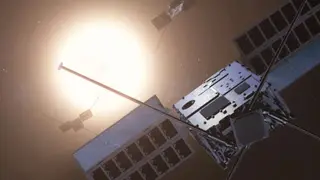
NASA has pushed the launch of its SunRISE mission to no earlier than mid-2027. The six small satellites will ride a SpaceX Falcon Heavy as part of a U.S. Space Force rideshare, after the mission switched from a Vulcan Centaur. Once deployed above geosynchronous orbit, they will extend antenna booms and work together as a radio telescope.
NASA now targets no sooner than mid-2027 for SunRISE, a six-spacecraft radio observatory. The SmallSats, each roughly cereal-box size, will launch on a Falcon Heavy from Kennedy Space Center through a U.S. Space Force rideshare. The mission previously planned to use Vulcan Centaur; a February solid-motor anomaly that paused Vulcan flights may have influenced the switch.
At Utah State University’s Space Dynamics Laboratory, the satellites completed thermal-vacuum, electromagnetic-compatibility, and vibration checks. They remain in Logan until shipment to Florida. After release just above geosynchronous orbit, each craft will extend four 2.5-meter booms in an X shape and fly within about 10 miles of the others, combining as one radio telescope to study solar radio bursts.
The delay and rocket switch may affect researchers, satellite operators, and space-weather forecasters who could use SunRISE’s observations of solar radio bursts. Better tracking of particle events might eventually help protect spacecraft and astronauts, though the mid-2027 target means those benefits may arrive later. The rideshare arrangement could also tie the mission’s schedule to U.S. Space Force priorities, potentially influencing when the science community receives this new radio-telescope capability.