India's renewable growth strains transmission networks, raising curtailment
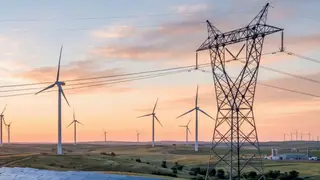
India's fast addition of solar and wind capacity is outpacing the transmission infrastructure needed to move that power, creating operational and financial risks. Solar curtailment reached 8,133 GWh in April-June 2026 due to transmission bottlenecks and grid security needs, with monthly figures of 2,417 GWh, 3,235 GWh, and 2,481 GWh. The article attributes the problem to congestion in resource-rich regions, delays in transmission projects, and the midday generation profile of solar plants.
India’s solar and wind build-out is outpacing the wires meant to carry it. In April–June 2026, solar curtailment hit 8,133 GWh, split across 2,417 GWh in April, 3,235 GWh in May, and 2,481 GWh in June. Congestion in resource-rich zones, delayed transmission projects, and solar’s midday peak all contribute.
Transmission additions have repeatedly missed targets. In 2025–26, 12,139 ckt km was completed against 15,382 ckt km planned; for 2026–27, only 4,081 ckt km of a 16,554 ckt km goal was done by July 31. Right-of-way disputes, land and forest clearances, and limited HVDC converter suppliers slow projects. Temporary grid access leaves generators exposed when networks are congested.
Persistent curtailment could affect renewable developers and investors through weaker revenues and greater uncertainty, making them more cautious about future bids. Grid operators may face harder balancing tasks, while electricity users could see cost or reliability effects if clean power cannot reach demand centres. Communities in resource-rich regions might host projects whose output is sometimes wasted, and delays could slow local economic benefits. The wider outcome may depend on how quickly transmission, land, and clearance bottlenecks are resolved.