Factors Behind Lower Chinese EV Prices in 2026
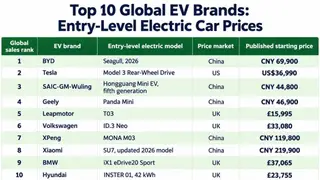
Chinese electric vehicles tend to cost less because of cheaper batteries, integrated manufacturing, extensive supplier networks, and fierce domestic competition. The IEA found BEV production costs in China were over 30% below those in advanced economies, with batteries accounting for roughly one-third of that gap. BloombergNEF data showed China's average battery pack price at $84/kWh in 2025, compared with higher averages in North America and Europe.
EXPANDED:
The IEA compared standardized small SUVs using 2024 costs and found Chinese BEV production expenses over 30% lower than advanced economies, with batteries explaining about one-third of that gap. A similar manufacturing difference appeared for conventional cars, so the advantage is not unique to electric models. BloombergNEF reported a global average lithium-ion pack price of $108/kWh in 2025, down 8% annually, while China averaged $84/kWh. North American and European averages were 44% and 56% higher, respectively, though those figures span varied uses and chemistries.
LFP chemistry, which avoids nickel and cobalt, made up over 55% of EV battery deployment in 2025, up from nearly 50% in 2024, and China produced more than 80% of global battery output. BYD cites its Blade Battery, Cell-to-Body design and 8-in-1 powertrain, and sold over 4.6 million new-energy vehicles in 2025. Smaller packs can cut costs too: at $100/kWh, dropping from 60 kWh to 45 kWh saves $1,500, with less stored energy as the trade-off.
Count words? First para: The(1) IEA2 compared3 standardized4 small5 SUVs6 using7 2024(8) costs9 and10 found11 Chinese12 BEV13 production14 expenses15 over16 30%17 lower18 than19 advanced20 economies21, with22 batteries23 explaining24 about25 one-third26 of27 that28 gap29. A30 similar31 manufacturing32 difference33 appeared34 for35 conventional36 cars37, so38 the39 advantage40 is41 not42 unique43 to44 electric45 models46. BloombergNEF47 reported48 a49 global50 aver