Taurid meteor showers to offer bright fireballs with dark skies in 2026
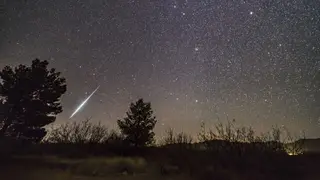
The Southern and Northern Taurids overlap in late October and November, producing occasional bright, slow meteors visible from both hemispheres. Their radiant points lie near the Pleiades in Taurus, and the showers are nicknamed the Halloween fireballs. In 2026, moonlight should interfere little during the main peaks.
The Taurids consist of two related streams, the Southern and Northern Taurids, whose activity overlaps during late October and November. Their meteors appear to originate near the Pleiades in Taurus, a position that makes the display observable from both hemispheres. The broader period of activity stretches from September into December.
The Southern Taurids run from about September 20 to November 20. One branch peaks near October 14, while a fireball-prone branch peaks overnight November 4–5. Rates are modest—roughly five meteors per hour under ideal conditions—but these meteors enter the atmosphere slowly, around 27 kilometers per second, so bright ones can be striking. In 2026, moonlight should be minimal around the main peaks.
The Taurids may draw casual skywatchers and astronomy clubs to look up during dark evenings, especially around Nov. 4–5. Their modest rate could mean disappointment for those expecting a storm, while bright fireballs may generate local reports and social media interest. Planetariums and educators could use the event to explain meteor science and safe viewing. Light pollution and weather may limit experiences.