Unusually Wide Belemnite Fossil Found in Jurassic Wyoming Rocks
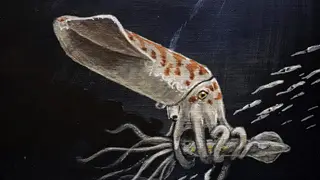
A new belemnite species, Wyoteuthis linsterorum, has been described from two rostra collected in Wyoming's Sundance Formation. The fossils are unusually broad and barrel-shaped, making them the thickest belemnite rostra recorded. CT scans placed the animal in Megateuthididae, a family previously thought to have disappeared about 20 million years before this species lived.
Belemnites were extinct cephalopods related to modern squid and cuttlefish. Only their rostrum — a hard calcite rear structure — typically survives fossilization, while soft tissues decay. The Sundance Formation preserves deposits from a shallow sea that once stretched over parts of the western United States. Most Wyoming specimens measure 5–10 cm long and 1–2 cm wide; this one reached 6 cm across.
Because sediment filled the fossils, researchers turned to CT scanning to examine internal features. Cavity angle, surface grooves, and tip striations supported placement in Megateuthididae. The team links the species to the older genus Brevibelus and points to a possible refuge in the northeastern Pacific.
Discoveries like this may remind amateur rockhounds and museum visitors that invertebrate fossils can still yield scientific surprises, potentially encouraging more public collecting and reporting. For paleontologists, the find could prompt re-examination of museum drawers and existing collections for overlooked megateuthidid material. Its rarity may also shape how researchers interpret Jurassic ecosystems, though a single species is unlikely to overturn broader extinction timelines. Public interest in such finds could modestly support fossil-related tourism and education in Wyoming.