Indian Battery Cell and EV Manufacturing Projects Draw Fresh Capital
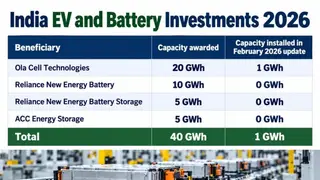
India's electric vehicle and battery sector is drawing investment into cell production, vehicle assembly, charging infrastructure, and stationary storage. The national Advanced Chemistry Cell program has allocated ₹18,100 crore to support 50 GWh of capacity, though only a small share of awarded capacity had been installed by the latest update. Tata's Agratas has begun receiving equipment for a 20 GWh first-phase plant in Sanand, while other firms such as Amara Raja and Exide are also expanding plans.
India’s Advanced Chemistry Cell program has ₹18,100 crore to support 50 GWh. A February 2026 update said 40 GWh was awarded to four recipients, with ₹3,237 crore invested and 1,118 jobs as of December 31, 2025. Installed capacity equaled 2.5% of awarded capacity, and no incentives had been claimed. Separately, at least ten non-applicant manufacturers announced about 178 GWh over five years.
Agratas received first process equipment in September 2026 for a 20 GWh initial Sanand plant. Amara Raja commissioned a ₹500 crore qualification plant with 60 MWh capacity and over 100 staff, ahead of a planned 2 GWh commercial line in 2027. Exide plans 12 GWh in two 6 GWh phases.
If these projects advance, they may create manufacturing and technical jobs while giving automakers and grid operators more domestic battery options. Drivers could see gradually broader EV availability, though costs and charging access may still shape adoption. Telecom and stationary-storage users might benefit from added supply. Much depends on whether announced capacity moves through commissioning, qualification and commercial production, so near-term effects could remain limited until output and reliability are proven.