Grid Investment to Reach $600 Billion as Equipment Demand Surges
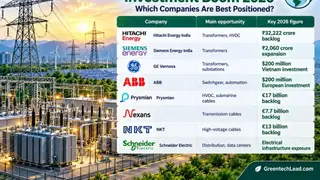
The IEA estimates annual global grid investment must rise from about $400 billion to $600 billion by 2030. Growing electricity demand from AI data centers, renewables, electric vehicles and industrial electrification is driving orders for transformers, cables, switchgear and grid automation. Hitachi Energy, Siemens Energy, GE Vernova, ABB, Schneider Electric, Prysmian, Nexans and Indian transmission contractors are positioned to benefit.
The IEA projects yearly grid investment must rise roughly half, from $400 billion to $600 billion by 2030. Over 2,500 GW of renewables, storage and large power projects await grid connections. Solar and wind could grow from about 17% to 27% of electricity generation by 2030, while transmission development can take 5–15 years.
Equipment suppliers are expanding. Hitachi Energy India's June 2026 backlog reached ₹32,222.1 crore; quarterly revenue rose 68.6% with a 16% EBITDA margin. It started a Gujarat plant and announced a $528 million Mississippi transformer factory plus ₹2,000 crore of Indian investment. Siemens Energy India approved ₹2,060 crore for 30,000 MVA transformer capacity; GE Vernova plans a $200 million Vietnam transformer plant and $30 million component expansion.
This investment wave could affect households, businesses and workers in many regions. Upgraded grids may improve reliability and make it easier to connect renewables, data centers and electric vehicles. New factories and transmission projects could create construction and manufacturing jobs. However, higher utility spending may eventually reach ratepayers through bills, and communities near new lines or plants may face land-use and permitting debates. The pace of delivery may determine whether these benefits arrive quickly or remain constrained by long project timelines.