Credentials Cross Security Boundaries and Demand a Unified View
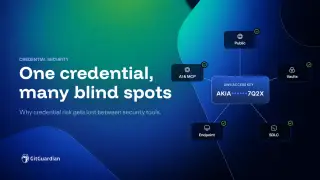
Credentials appear across code, endpoints, cloud systems, identity tools, and secrets managers, so individual security products often provide only a partial view. When a key is discovered, teams still need to determine whether it is active, who owns it, what access it grants, and whether copies exist elsewhere. The article recommends mapping the full credential layer across public repositories, vaults, software development systems, endpoints, and other places where plaintext secrets can reside.
Credentials are not confined to one security domain. They can appear in code, devices, cloud environments, identity platforms, and secret stores, so a single product may reveal only part of the exposure. A discovered key raises follow-up questions about its status, owner, permissions, and possible duplicates.
The article describes a wider set of credential locations spanning public repositories, managed vaults, software development systems, developer machines, and AI or MCP tools. It recommends tracing how secrets are created, stored, copied, and exposed, then handling detection, remediation, and prevention as a connected process.
A unified view of credentials could help organizations respond faster when secrets leak, potentially reducing the chance that one exposed key opens broader systems. Developers, security teams, and service providers may feel the operational burden most, while customers and employees could be affected if access is misused. Because credentials move across tools and teams, partial visibility may leave gaps that attackers or automated agents can exploit, making cross-system mapping a practical risk-management concern rather than a purely technical one.