Euclid Telescope Finds Its First Comet During Galaxy Survey
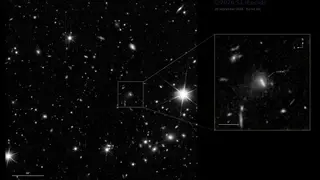
The Euclid space telescope has discovered a comet, now named C/2026 S1 (Euclid), during observations made in September 2026. The find came from software that flagged a moving object across multiple images, later confirmed as an active comet with a coma. Although Euclid was built to study distant galaxies and dark energy, this bonus discovery adds to knowledge of Solar System objects.
Euclid, launched in July 2023, was built to survey roughly 1.5 billion galaxies as far as redshift 2—light from about 10 billion years ago—to probe cosmic expansion and dark energy. Its first comet discovery came from September 2026 images, where new software spotted a moving streak across several frames.
Follow-up checks found the object in five image sets and revealed a dusty haze, confirming an active comet. Designated C/2026 S1 (Euclid), it lies about 1.3 billion km away, follows a long-period orbit, and crossed Euclid's Deep Field North in Draco despite the telescope usually avoiding the dusty galactic plane.
The discovery may have modest but broad societal impact: astronomers and citizen-science communities could gain another Solar System object to study, while space-agency teams may use it to demonstrate that survey archives and detection software can yield unexpected science. The public may see it as a reminder that missions designed for cosmology can also enrich planetary science. Because it is a single long-period comet, any practical effects are likely indirect, centered on research, education, and future mission planning rather than daily life.