Euclid Telescope Spots Unexpected Comet During Dark Universe Survey
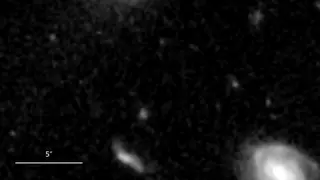
The Euclid space telescope, while surveying distant galaxies to study dark matter and dark energy, detected a previously unknown comet. The object, now called C/2026 S1 (Euclid), was about 800 million miles away and located between the orbits of Jupiter and Saturn, well outside the solar system's main plane. The Minor Planet Center named the comet after the spacecraft, and its high speed means it will take thousands of years to orbit the sun.
Euclid’s primary work is a wide survey of galaxies across more than a third of the sky, tracing cosmic structure to investigate dark matter and dark energy. During observations of the Euclid Deep Field North in September 2026, a fast object appeared in multiple frames; its fuzzy envelope suggested dust and gas release.
The comet, C/2026 S1 (Euclid), was about 800 million miles away, between Jupiter and Saturn but far outside the planets’ orbital plane. Mikko Pöntinen found it with detection software after spotting a streak, then confirmed it in five image sets. The Minor Planet Center confirmed the discovery on October 8, 2026.
The accidental find may strengthen public interest in planetary science and show how survey instruments can yield bonus discoveries. Astronomers and mission planners could benefit from additional comet targets and improved detection methods, while educators may use the story to illustrate serendipity in science. Its practical effects are likely modest, but it could raise awareness of how dark-energy surveys and solar-system studies can overlap.