Euclid telescope spots its first previously unknown comet during deep-sky survey
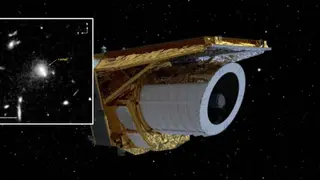
ESA's Euclid telescope detected the previously unknown comet C/2026 S1 in images captured between September 16 and 24, 2026, at a distance of roughly 1.3 billion kilometers from Earth. Euclid was built to survey distant galaxies and normally avoids the solar system's crowded plane, making the find unusual. The comet follows an orbit that takes thousands of years to complete.
Euclid, launched in July 2023, was designed to map dark matter and dark energy by imaging distant galaxies. It usually steers clear of the solar system's crowded plane, where dust and small bodies can disrupt sensitive observations. During a survey of the Euclid Deep Field North in Draco, images from 16–24 September 2026 revealed C/2026 S1 about 1.3 billion km away.
Mikko Pöntinen, a University of Helsinki doctoral student, built software that flagged a moving streak across multiple frames. He located the object in five image sets; a fuzzy halo suggested an active comet releasing dust and gas. No catalog match led the team to report it to the IAU.
The discovery may strengthen confidence that deep-sky observatories can contribute to solar-system science, potentially benefiting astronomers and mission planners preparing comet interceptors. It could also spark public interest in space science and encourage amateur observers to follow newly reported objects. Because the comet is distant and on a long orbit, immediate practical effects are likely limited; the main impact may be scientific and educational, showing how survey data can yield unexpected results.