Cave Walls Preserve DNA From Prehistoric Visitors
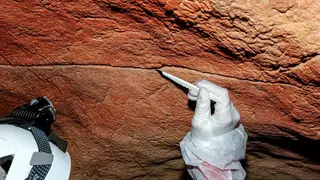
Researchers extracted ancient human mitochondrial DNA from rock surfaces in caves, including unpainted areas sampled as controls. The team examined 24 art panels across 11 caves and obtained authentic DNA from five of 54 samples. The approach may let scientists study who visited or painted in caves without excavating deposits.
The First Art project, spanning Spanish and Portuguese institutions plus partners in the UK, China, and Germany, initially focused on dating and chemically characterizing early cave art. Its collaboration with the Max Planck Institute for Evolutionary Anthropology extended the work to genetic analysis of wall surfaces.
Across 24 panels in 11 caves, researchers tested 54 samples; five produced genuine ancient human mitochondrial DNA. Unexpected positives came from unpainted control areas in Escoural and Covarón caves. Two samples lacked other animal mitochondrial DNA, pointing to direct human deposition, while three mixed samples suggested movement via sediment or water.
This could affect archaeologists, heritage professionals, and descendant communities by offering a less invasive way to ask who entered caves, potentially reducing pressure to excavate. It may also reshape public interpretation of rock art by distinguishing visitors from artists, though the method cannot yet link DNA to painting. With few positive samples and possible environmental transfer, its social impact will depend on replication and careful communication.