Ancient Japanese Funerary Figure Unearthed in 1,500-Year-Old Tomb
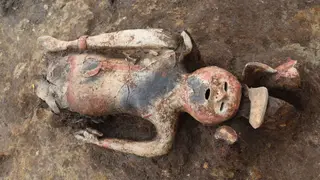
Archaeologists have uncovered a humanoid figurine within a 1,500-year-old burial mound in Japan, believed to represent a shrine maiden or religious figure. The discovery offers insight into ancient spiritual practices and burial customs of early Japanese society. The artifact’s delicate craftsmanship suggests high social or ritual significance.
Archaeologists have discovered a humanoid figurine inside a burial mound estimated to be 1,500 years old in Japan. The artifact, found within a funerary context, is believed to represent a shrine maiden or religious figure, offering rare insight into spiritual beliefs and ritual practices of early Japanese society during the Kofun period. The figurine’s intricate craftsmanship suggests it held significant social or ceremonial importance, possibly indicating the high status of the individual buried in the mound or the community's reverence for religious roles. While the exact location of the excavation is not specified in the available material, such discoveries are typically linked to regions with known burial mounds, like Nara or Osaka Prefectures, which have yielded numerous Kofun-era artifacts.
The find adds to a growing body of evidence about the spiritual and social complexity of ancient Japan, where burial customs often reflected religious roles and societal hierarchy. Prior archaeological work in similar contexts has uncovered clay figures and ritual objects, but this particular figurine stands out due to its detailed representation and presumed function as a symbolic or devotional figure. The discovery may prompt reevaluation of existing interpretations about the role of female or non-elite religious practitioners in early Japanese culture, especially given the common focus on male deities or elite warriors in prior findings.
The teams involved are not named, bu
This discovery could deepen public interest in Japan’s ancient past, particularly among younger audiences drawn to cultural heritage and spiritual traditions. Museums and educational institutions may leverage the find to develop new exhibits or curriculum materials on early Japanese religion and burial practices, potentially boosting attendance and engagement with history. The artifact’s depiction of a shrine maiden may also prompt broader discussions about gender roles in prehistoric societies, challenging assumptions that religious authority was exclusively male-dominated. Comparable to the 19th-century discovery of the Terracotta Army in China—another culturally significant find that reshaped public understanding of ancient state rituals—this figurine may similarly influence how scholars and the public perceive early Japanese spiritual life. It could also affect heritage tourism, especially if the site is opened for limited access or featured in documentaries. What to watch fo