Unusual Iron Age Warrior Helmet Discovered in Northern Poland, Hinting at Ancient Trade Networks
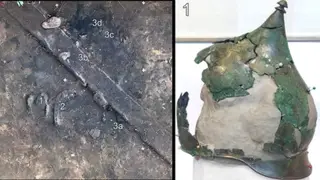
Archaeologists have uncovered a rare La Tène culture bronze helmet at Łysa Góra, a multi-functional site in northern Poland that served as a settlement, metalworking hub, and ritual location. The find is significant due to its distance from the helmet's likely origin, suggesting extensive cultural and commercial exchange across Europe during the Iron Age. Its presence points to the region’s role in the Baltic amber trade route.
Archaeologists have unearthed a rare bronze helmet belonging to the La Tène culture at Łysa Góra in northern Poland, a site that functioned as a settlement, metalworking center, and ritual location during the Iron Age. The discovery is notable for its geographical distance from the likely production region of such artifacts, suggesting long-distance trade and cultural exchange across Europe. This helmet, one of few known examples found so far from central Europe, underscores the significance of the Baltic amber trade route, through which valuable materials and goods moved between regions. While no specific date or number of artifacts has been provided, the find adds to growing evidence that northern Poland was not isolated but integrated into broader prehistoric networks.
The La Tène culture, known for its distinctive art style and advanced metalworking, flourished across much of Europe from around 450 BCE to the Roman conquest. The presence of a helmet at Łysa Góra indicates that elite individuals or warrior classes in this region had access to high-status items likely imported from central or western Europe. This challenges earlier assumptions about the cultural and economic marginality of northern areas during the Iron Age. While the specific identities of the people involved remain unknown, the discovery reflects the work of archaeological teams investigating multi-period sites with layered functions. The institutions behind the excavation—likely Polish national or regio
The discovery could reshape perceptions of prehistoric northern Europe as peripheral, highlighting instead its active participation in long-distance exchange networks. Communities in modern-day Poland may see renewed cultural pride tied to their region’s historical significance in ancient trade. Institutions like museums and heritage organizations may use the find to bolster educational programs on European prehistory. Comparable to the 1939 discovery of the Sutton Hoo ship burial, which redefined Anglo-Saxon material culture, this helmet may prompt reassessment of regional identities in Iron Age Europe. However, unlike Sutton Hoo, which was a single elite burial, Łysa Góra’s multi-functional nature suggests broader societal engagement with trade and ritual. What to watch for next is whether further excavations at the site yield additional artifacts that confirm sustained interaction with central European centers—could this become a key node in understanding early European connectivity