Skywatchers Await Bright Fireballs as Southern Taurids Reach Peak This Week
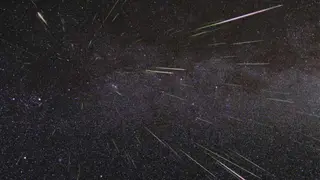
The Southern Taurids meteor shower is expected to peak on the night of November 4–5, offering viewers a chance to see bright fireballs streaking across the sky. Though slower and less frequent than other major showers, their overlap with the Northern Taurids increases the likelihood of observing luminous meteors. The radiant point lies near the constellation Taurus, and optimal viewing requires dark skies with minimal light pollution.
The Southern Taurids meteor shower is expected to peak on the night of November 4–5, offering skywatchers a chance to observe slow-moving fireballs streaking across the sky at approximately 17 miles per second. Though only averaging five meteors per hour under ideal conditions, the shower’s potential for bright fireballs increases due to its overlap with the Northern Taurids, which are active from October 20 to December 10 and also originate near the constellation Taurus. The Moon will be 26 percent illuminated during the peak, a waning crescent phase that may slightly hinder visibility but is unlikely to obscure brighter meteors. Observers in both hemispheres can view the event, provided they have clear skies and minimal light pollution. The Northern Taurids, peaking on November 11–12 with only 3 percent Moon illumination, offer even better viewing conditions. Both showers are linked to comet 2P/Encke, a periodic comet with a 3.3-year orbit discovered in 1786 and named after Johann Franz Encke, who calculated its path. The Northern Taurids are believed to originate from asteroid 2004 TG10, a large fragmented piece of the same comet. Meanwhile, the Leonids meteor shower, active November 6–30 and peaking on November 16–17 with up to 15 meteors per hour, is also expected, though its visibility may be reduced by a 37 percent illuminated Moon.
The American Meteor Society (AMS) plays a central role in tracking and reporting these events, providing data that informs public viewing
The Southern Taurids’ peak may inspire renewed public interest in amateur astronomy, particularly among urban dwellers seeking accessible celestial experiences. With minimal equipment needed and widespread media coverage, such events could boost engagement with science education initiatives and local stargazing groups. The involvement of organizations like NASA and the American Meteor Society helps legitimize citizen observations, potentially feeding data into broader atmospheric or orbital studies. Comparable to the 2001 Leonid storm that drew global attention and media frenzy, this year’s event may similarly spark temporary spikes in telescope sales or app downloads for skywatching tools. However, unlike past storms with dramatic visual displays, the Taurids’ modest rate means impact will likely be more subtle—focused on community events rather than mass spectacle. The broader societal effect could include increased support for dark-sky preservation efforts, as light pollution remain