Zelensky arrives in Dublin ahead of summit, awaits U.S. envoys' update on peace talks
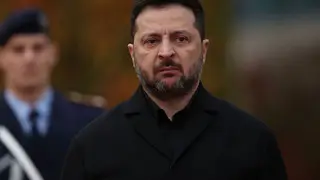
President Volodymyr Zelensky arrived in Dublin to attend the European Political Community summit, where he plans to hold bilateral and multilateral meetings. He anticipates a debrief from U.S. special envoys Steve Witkoff and Jared Kushner, who recently concluded two days of peace talks in Abu Dhabi before traveling to Moscow to meet with Russian President Vladimir Putin. Despite ongoing efforts, Washington-led negotiations remain stalled over core issues including Ukraine’s territorial integrity, NATO membership, military restrictions, and the status of the Moscow-linked Ukrainian Orthodox Church.
President Volodymyr Zelensky arrived in Dublin on November 11, 2026, ahead of the European Political Community summit scheduled for November 12. He is expected to hold bilateral and multilateral meetings with European leaders, including German Chancellor Friedrich Merz, whose recent meeting with Zelensky in Berlin was documented. A key focus of Zelensky’s visit is a planned debriefing with U.S. special envoys Steve Witkoff and Jared Kushner, who concluded two days of peace talks in Abu Dhabi before traveling to Moscow to meet with Russian President Vladimir Putin. The envoys acknowledged “some openings and opportunities” but offered no breakthroughs, signaling continued diplomatic complexity. The core issues remain unresolved: Ukraine’s territorial integrity, particularly the status of Donbas; Russia’s demand for a NATO membership ban; military limitations on Ukraine; and the role of the Moscow-linked Ukrainian Orthodox Church. Kyiv insists on an unconditional ceasefire as a precondition for further negotiations, while Moscow has consistently rejected this proposal. The U.S.-led process remains stalled, with no progress on fundamental disagreements.
The background to these developments includes years of failed diplomacy, including previous attempts at peace talks that collapsed due to Russian intransigence and Ukraine’s insistence on sovereignty. The current phase reflects a shift toward high-level backchannel engagement, with Kushner and Witkoff acting as intermediaries despite the lack of formal negotiations. Ukraine seeks international validation of its territorial integrity and security guarantees, while Russia demands recognition of its control over occupied regions and long-term constraints on Ukrainian military capability. What remains unknown is whether Putin’s meeting with the U.S. envoys in Moscow produced any tangible concessions or signals, and how Zelensky will respond to their debriefing. The outcome of the Dublin summit may influence future diplomatic pathways, but no immediate resolution is expected.
The presence of high-level envoys and the focus on peace talks in Dublin underscore the ongoing international effort to de-escalate the war in Ukraine, though progress remains elusive. This situation could affect European security dynamics, particularly as NATO members reassess defense commitments amid stalled diplomacy. The EU may face pressure to strengthen its military and economic support for Ukraine if diplomatic channels appear to be failing. Markets sensitive to geopolitical risk—especially energy and defense sectors—may react to any perceived shift in the conflict’s trajectory. A comparable precedent is the 2014 Minsk agreements, which initially offered hope but ultimately failed due to lack of enforcement and Russian non-compliance. The current talks may follow a similar pattern if they produce only symbolic outcomes without binding commitments. What remains uncertain is whether the U.S. envoys’ Moscow visit altered Russia’s stance or merely reaffirmed existing positions. Observers should watch for any shifts in Ukraine’s public diplomacy, potential changes in Western aid packages, or unexpected statements from Putin that could signal a new phase—though such developments remain speculative.