India Balances Renewable Expansion with Coal Growth Amid Grid Infrastructure Strain at COP31
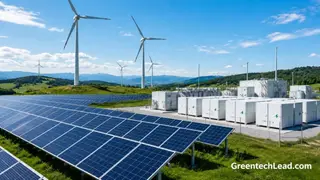
At COP31 in Antalya, Turkey, India faces a dual challenge as it advances 147.72 GW of renewable energy projects under construction while simultaneously developing 47.55 GW of thermal power capacity. The country’s electricity infrastructure, with total installed capacity reaching 558.90 GW by September 2026, includes 299.25 GW of renewable energy when large hydro is included. Despite progress, grid investment and transmission upgrades remain critical bottlenecks for integrating clean power at scale.
At COP31 in Antalya, Turkey, India’s energy strategy has come under global scrutiny as it advances 147.72 GW of renewable energy projects under construction while simultaneously developing 47.55 GW of thermal power capacity, primarily coal and lignite. By September 2026, India’s total installed electricity capacity reached 558.90 GW, with renewables—including large hydro—accounting for 299.25 GW. Despite this progress, the country faces a structural challenge: renewable generation supplied only 28.8% of total electricity output between April and September 2026, even though they made up over half of installed capacity. This gap underscores the intermittency of solar and wind and the continued reliance on dispatchable coal plants, which are expected to supply about half of national electricity by 2035–36. The Ministry of Power has projected a need for 315 GW of coal and lignite capacity by then, with 47.55 GW already under construction as of June 2026. India’s stance at COP31 reflects its prioritization of energy security and economic growth over binding fossil fuel phase-out commitments, resisting proposals that could limit development choices. Key institutions like the Central Electricity Authority (CEA), Ministry of New and Renewable Energy (MNRE), and NITI Aayog provide data and policy direction, while transmission infrastructure remains a critical bottleneck. The national transmission plan calls for ₹9.16 lakh crore in investment from 2022–23 to 2031–32, with Power Grid Corporation planning ₹37,000 crore in capex for FY2026–27. What remains unresolved is whether grid modernization and storage deployment can keep pace with renewable expansion to reduce coal dependency.
India’s dual energy path—expanding renewables while expanding coal—could shape global climate negotiations by highlighting the tension between development needs and decarbonization goals, particularly in emerging economies. The country’s reliance on coal for reliable generation may influence other developing nations to adopt similar strategies, potentially slowing the pace of a global fossil fuel phase-out. This approach may also affect investment flows, as international financiers increasingly demand clean energy commitments, yet remain cautious about funding projects with long-term carbon liabilities. The disparity between installed capacity and actual electricity generation—where renewables contribute less than half their potential—reveals that infrastructure and dispatchability are as crucial as deployment volume. A comparable case is China’s early 2010s grid congestion crisis, which delayed renewable integration despite massive investment. India may face similar challenges if transmission upgrades lag. What could emerge next is a shift toward greater battery storage deployment or regional power trading to balance supply, though this depends on policy coherence and funding. Monitoring the pace of grid investment and coal plant commissioning will be essential in assessing whether India’s energy mix evolves toward sustainability or remains locked in a transitional compromise.