David Bednar and Ryan Jeffers Set Records with $23.15M Qualifying Offers
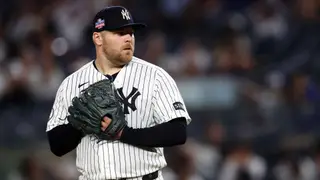
Yankees closer David Bednar and Minnesota catcher Ryan Jeffers became the only players to accept the $23.15 million qualifying offer, setting new records for average annual value at their positions. Bednar, a two-time All-Star, earned the record for relief pitchers with a 2.47 ERA and 35 saves, while Jeffers surpassed J.T. Realmuto’s previous catcher record. Six other free agents declined the offer, including Seiya Suzuki and Randy Arozarena.
On November 17, 2026, New York Yankees closer David Bednar and Minnesota Twins catcher Ryan Jeffers became the first players in Major League Baseball history to accept the $23.15 million qualifying offer, setting new records for average annual value at their respective positions. Bednar, a two-time All-Star, posted a 2.47 ERA and 35 saves in 39 chances during the 2026 season, surpassing Edwin Díaz’s previous record for relievers set in a $69 million, three-year deal with the Dodgers. Jeffers, 29, broke J.T. Realmuto’s prior catcher record with a contract that averages $23.15 million annually, despite missing nearly two months due to a broken hamate bone sustained in May. The qualifying offer, determined by the average of the top 125 MLB contracts in 2026, was extended to eight players on November 2, but only Bednar and Jeffers accepted it. Six others—Seiya Suzuki, Randy Arozarena, Trevor Rogers, Brandon Lowe, Adrian Morejon, and Jake Bauers—declined. Bauers, who received a qualifying offer from Milwaukee, instead signed a $58 million, four-year deal with Boston, including a $2 million trade bonus. The qualifying offer system, introduced in 2012, allows teams to retain draft pick compensation if a player signs elsewhere, but only if the player was with the same team since Opening Day and has never previously received such an offer. The broader free agency market remains active, with other top-tier players like Tarik Skubal still unsigned, and the impact of these decisions on team strategies and player valuation remains to be seen.
The acceptance of the $23.15 million qualifying offer by Bednar and Jeffers could signal a shift in how elite players view short-term security versus long-term risk in free agency. While only 20 of 165 prior offers have been accepted since 2012, this year’s high-value agreement may encourage more players to consider the offer as a viable benchmark, especially those with strong track records but uncertain market demand. The record-setting contracts for relievers and catchers may influence future negotiations, particularly for younger players in those roles who may now expect higher base salaries. Comparable to the 2018 season when the qualifying offer system began to gain traction, this year’s outcome may reflect a growing willingness among elite performers to lock in guaranteed money, especially in a market where top-tier contracts remain scarce. However, the broader impact on team spending and competitive balance remains uncertain, as only a small fraction of players accept the offer. What’s next could include more teams using the offer as a strategic tool to retain core players or secure compensation, while also shaping how players assess their market value. The long-term effects on player mobility and draft equity may only become clear after the next amateur draft.