Only Two Players Accept 2026 Qualifying Offer Amid Offseason Shifts
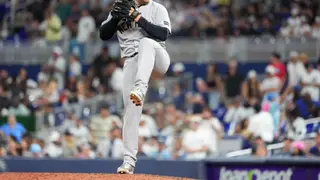
In 2026, only two players accepted the $23.15 million qualifying offer: New York Yankees closer David Bednar and Minnesota Twins catcher Ryan Jeffers. The remaining six who declined signed elsewhere, including high-profile names like Kyle Tucker and Framber Valdez, while three re-signed with their previous teams. The low acceptance rate reflects uncertainty around the upcoming December lockout and the desire for longer-term deals.
In November 2026, only two players—New York Yankees closer David Bednar and Minnesota Twins catcher Ryan Jeffers—accepted the $23.15 million qualifying offer, a sharp decline from the four who accepted the prior year’s $22.025 million offer. The remaining six players who declined included high-profile names such as Kyle Tucker, Framber Valdez, and Dylan Cease, all of whom signed elsewhere, while three—Zac Gallen, Michael King, and Kyle Schwarber—re-signed with their previous teams. The low acceptance rate reflects growing uncertainty surrounding the upcoming December 1 lockout, which may impact contract negotiations and team financial planning. Bednar, 32, opted for the one-year deal, likely to avoid the risk of a shorter-term contract amid market instability, while Jeffers, 29, accepted the offer despite his strong 128 wRC+ season, possibly due to concerns over his long-term role behind the plate and the draft pick penalty associated with signing him. The Twins, in turn, signed Sonny Gray to a two-year, $55 million deal, reinforcing their rotation and retaining key offensive contributors. Both Bednar and Jeffers now hold the highest AAVs at their respective positions—Jeffers as the top-paid catcher and Bednar surpassing Edwin Díaz among relievers—positioning them well for more lucrative deals in 2028. The broader trend suggests teams may be favoring short-term commitments or trades over long-term free agent contracts, as seen in recent moves like the Maikel Garcia–Bryce Miller swap and the Davis Martin trade to Colorado.
The low acceptance of the 2026 qualifying offer could signal a broader shift in player and team behavior ahead of a potentially contentious collective bargaining agreement. With the December 1 lockout looming, players may be prioritizing immediate security over long-term risk, while teams may be hesitant to commit to multi-year deals amid uncertainty. This dynamic may accelerate trade activity, as teams seek controllable assets rather than expensive free agents. The case of Seiya Suzuki, who is drawing interest from the Padres and could enable a shift in Fernando Tatis Jr.’s role, illustrates how free agency can reshape team strategies. The broader impact may be a more fluid, transaction-heavy offseason, with teams favoring flexibility over long-term stability. This could affect player development, as young talent may be traded earlier, and could influence how front offices evaluate risk. What remains unclear is whether the lockout will materialize or how it will alter the landscape. The coming months will reveal whether teams continue to favor short-term deals or begin to re-engage in long-term commitments once the labor climate stabilizes.