Vulcan Rocket Failure Marks First Major Setback for United Launch Alliance, Impacting NASA, Amazon, and U.S. Space Force
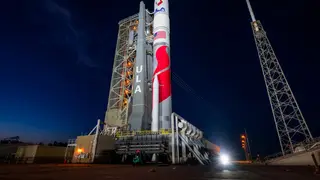
On November 15, 2026, United Launch Alliance's Vulcan rocket suffered a mission-ending malfunction 10 minutes after launch, destroying Amazon's Leo broadband satellites. This failure marks the first total mission loss for ULA, a Boeing-Lockheed Martin joint venture, and undermines progress in competing with SpaceX. The setback affects NASA's lunar ambitions, U.S. Space Force operations, and the broader U.S. space industry's reliability amid ongoing issues with Blue Origin's BE-4 engines and New Glenn rocket.
On November 15, 2026, United Launch Alliance’s (ULA) Vulcan rocket experienced a mission-ending failure 10 minutes after liftoff from Space Launch Complex 41 at Cape Canaveral Space Force Station, Florida. The launch carried Amazon’s Leo broadband satellite constellation, which was destroyed during the anomaly. This marked the first total mission failure for ULA, a joint venture between Boeing and Lockheed Martin, since the company’s inception. The failure occurred despite the rocket’s use of six solid rocket boosters—more than in any prior Vulcan flight—and the first stage’s BE-4 engines, manufactured by Blue Origin, which had already faced scrutiny following the May 2026 explosion of Blue Origin’s New Glenn rocket during a test. The anomaly was traced to low first-stage performance, with the BE-4 engines firing 30 seconds longer than planned, likely due to inadequate fuel supply. ULA confirmed that stage separation occurred at a low altitude and below minimum velocity, preventing orbital insertion. Blue Origin and NASA are supporting the investigation, with NASA’s Jared Isaacman affirming support for ULA’s remediation efforts. The failure threatens Amazon’s Leo project, which is already behind schedule compared to SpaceX’s Starlink, and may delay NASA’s Artemis lunar program, which relies on ULA’s Centaur V upper stage and the Blue Moon lander, also dependent on BE-4 engines. The outcome of the investigation remains unknown, as does whether the BE-4 engines or fuel system design is at fault.
This failure could undermine confidence in ULA’s reliability as a key provider for national security and deep-space missions, particularly as the U.S. Space Force and NASA depend on its launch services. The setback may accelerate the shift toward SpaceX, already dominant in commercial and government launches, potentially reducing competition and innovation in the launch sector. The broader space industry may face ripple effects, especially if BE-4 engine issues are confirmed, threatening not only New Glenn’s return to flight in January 2027 but also Artemis missions relying on ULA’s Centaur V. A comparable precedent is the 2015 failure of Orbital Sciences’ Antares rocket, which delayed NASA’s cargo resupply program and led to increased reliance on SpaceX. The current situation may prompt renewed scrutiny of dual reliance on a single engine supplier, especially when that supplier is also a competitor. What remains uncertain is whether ULA will need to redesign its fuel system, delay future launches, or face increased oversight. The next few months will be critical in determining whether this incident becomes a temporary setback or a turning point in the U.S. space launch ecosystem.