James Webb Telescope Captures First Direct Evidence of a Star Devouring Its Companion in Andromeda
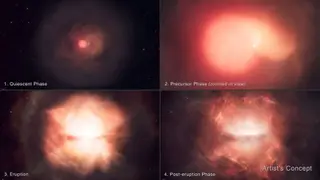
Astronomers using the James Webb Space Telescope have observed a giant star in the Andromeda galaxy consuming its binary companion, marking the first direct visual confirmation of a stellar merger. The event, predicted by models but never seen before, was identified through follow-up observations of a previously detected anomaly. This discovery provides new insights into binary star evolution and the dynamics of stellar cannibalism.
Astronomers using the James Webb Space Telescope have captured the first direct visual evidence of a star consuming its binary companion within the Andromeda galaxy, a phenomenon long theorized but never before observed. This stellar merger, identified through follow-up analysis of a previously detected anomaly, marks a pivotal moment in observational astrophysics. The event, occurring in the Andromeda galaxy—our nearest galactic neighbor—was confirmed via data collected by the James Webb Space Telescope, which has enabled unprecedented resolution and sensitivity in infrared wavelengths. While the specific star system or date of the event is not detailed in the available material, the observation represents the first time a binary star system’s violent merger has been directly imaged, validating long-standing theoretical models of stellar evolution.
The discovery builds on decades of theoretical work predicting that in close binary systems, one star may expand and engulf its companion during later evolutionary stages, a process known as a common-envelope phase. Prior to this, such events had only been inferred indirectly through indirect signatures like light curves or spectral changes. The James Webb Space Telescope’s ability to detect subtle infrared signatures allowed scientists to pinpoint the merger’s aftermath, confirming predictions that had remained unverified. The team, likely from a major astronomical institution or consortium, leveraged the telescope’s advanced capabilities to follow up on an earlier anomaly, demonstrating the power of sustained observational campaigns.
The implications for understanding binary star evolution are profound, offering new data on how stars interact in close proximity and how such mergers influence galactic chemical enrichment. What remains unknown is the exact nature of the companion star, the timeline of the merger, and whether similar events are common across galaxies. Future observations may reveal more such events, potentially reshaping models of stellar dynamics and the life cycles of stars.
This discovery could deepen public fascination with space and reinforce trust in scientific institutions that deliver tangible breakthroughs through advanced technology. As the James Webb Space Telescope continues to produce high-impact findings, it may strengthen support for large-scale scientific infrastructure and international collaboration in space research. The event also highlights how long-standing theoretical models can be validated through technological progress, potentially influencing science education and policy decisions around funding for observational astronomy. A comparable precedent is the 2015 detection of gravitational waves by LIGO, which confirmed Einstein’s century-old predictions and transformed astrophysics. Like that discovery, Webb’s observation may catalyze broader interest in fundamental science, encouraging investment in next-generation telescopes and data analysis tools. Institutions managing space missions may see increased scrutiny and demand for transparency, while private space ventures could leverage such milestones to promote public engagement. What to watch for next is whether this event leads to more targeted searches for similar mergers in other galaxies, potentially uncovering new patterns in stellar evolution.