Western Allies Urge Russia to Cease Attacks on Energy Infrastructure During Winter
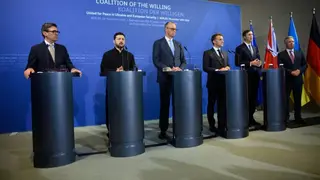
Leaders from Germany, France, the U.K., and Ukraine called on Russia to halt strikes on energy facilities during winter as a gesture toward peace, alongside a proposed truce to ensure safe food exports from the Black Sea. The joint statement, issued after a summit in Berlin, also pledged 90 billion euros in EU support and increased sanctions on Russian oil and cryptocurrency. The coalition affirmed readiness to participate in multilateral peace talks and provide security guarantees for Ukraine.
On November 19, 2026, leaders from Germany, France, the United Kingdom, and Ukraine convened in Berlin for the Coalition of the Willing summit, issuing a joint statement urging Russia to halt attacks on energy infrastructure during the winter months and to agree to a truce enabling safe Black Sea food exports. The call for a winter energy ceasefire was framed as a gesture of goodwill toward peace negotiations, with the coalition emphasizing the humanitarian toll of ongoing strikes on Ukraine’s heating and electricity systems. The statement pledged 90 billion euros ($98.7 billion) in EU support through the Ukraine Support Loan, alongside commitments to deliver additional air defense systems. Sanctions on Russian oil and cryptocurrency were also proposed as part of intensified economic pressure. The summit included high-level participation from U.S. envoys Jared Kushner and Steve Witkoff, who are leading U.S.-led efforts to coordinate multilateral peace talks involving Kyiv, Moscow, Washington, and European representatives for the first time. Despite a prior unilateral announcement by U.S. President Donald Trump earlier in the fall calling for an energy truce, Russia has continued its attacks, with President Vladimir Putin declaring on November 19 that Ukraine’s strike on the Crimean Bridge had ended any possibility of discussing a truce. Russia has shown no interest in halting infrastructure strikes, leaving civilians to prepare for another winter of blackouts and water shortages. The outcome of the Berlin summit remains uncertain, as Russia has not responded to the call.
The call for a winter energy truce could have significant humanitarian implications, particularly for Ukrainian civilians facing extreme cold and disrupted essential services. If Russia refuses, it may further erode international credibility and strengthen Western resolve to escalate sanctions. The focus on Black Sea food exports also reflects broader concerns about global food security, especially in vulnerable regions dependent on Ukrainian grain. The involvement of U.S. envoys and European leaders signals a coordinated diplomatic effort, but the lack of Russian engagement suggests that diplomatic progress may be limited without direct negotiations. A comparable precedent is the 2022 Black Sea Grain Initiative, which temporarily eased food supply disruptions but collapsed amid geopolitical tensions. This new initiative may face similar fragility. The success of the coalition’s strategy could depend on whether Russia perceives any strategic benefit in cooperation. What remains unclear is whether the EU’s financial commitments will be sufficient to sustain Ukraine’s resilience, or whether the proposed sanctions will effectively disrupt Russia’s war economy. Monitoring Russia’s response—and whether it signals a shift in posture—will be critical in the coming weeks.