Voyager 1 Reaches One Light-Day from Earth Amid Ongoing Data Transmission Failure
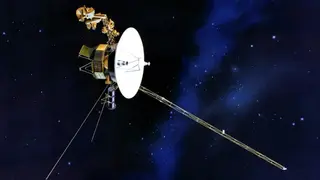
NASA's Voyager 1 spacecraft crossed one light-day from Earth on November 18, 2026, marking a historic milestone. However, engineers are investigating a data transfer issue that began on November 14, when the probe stopped sending science and engineering data despite maintaining a carrier signal. The problem is believed to stem from an onboard computer issue, and the spacecraft remains operational but unable to transmit data as of November 20.
On November 18, 2026, NASA’s Voyager 1 spacecraft achieved a historic milestone by crossing one light-day from Earth—approximately 16.1 billion miles—marking the farthest distance any human-made object has ever traveled. The event was confirmed by the NASA Deep Space Network (DSN) in Canberra, Australia, which detected a carrier signal from the probe at 5:16:07 a.m. EST, though no science or engineering data accompanied it. The data transmission failure began on November 14, when ground controllers noticed the absence of data despite the continued presence of the carrier signal. This signal indicates that Voyager 1’s attitude control system and antenna are still functional, but the onboard computer responsible for collecting and formatting data from the spacecraft’s subsystems appears to have failed. The issue echoes a similar anomaly in 2023, which was traced to a malfunctioning onboard computer. Engineers at NASA’s Jet Propulsion Laboratory (JPL) and Johnson Space Center are now analyzing telemetry and attempting to diagnose the problem, with resolution potentially taking weeks or longer due to the 24-hour round-trip communication delay. The spacecraft remains operational and is traveling at nearly 38,000 mph through interstellar space. NASA Administrator Jared Isaacman and the Glenn Research Center in Cleveland celebrated the milestone with public tributes, including illuminated landmarks. The team is also investigating whether the current issue relates to a brief 48-hour communication loss in October 2026, which resolved itself. What remains unknown is whether the problem is isolated to one computer or involves broader system degradation.
The ongoing data failure with Voyager 1 underscores the fragility of long-duration space missions, even when systems appear robust. While the spacecraft continues to send a carrier signal, the loss of science and engineering data limits real-time monitoring and scientific return, affecting researchers relying on its unique interstellar observations. The delay in communication—24 hours each way—means that troubleshooting is a painstaking process, raising questions about the sustainability of deep-space missions with aging hardware. This situation may influence future mission design, emphasizing redundancy and autonomous diagnostics for probes venturing beyond the solar system. A comparable precedent is the 2023 glitch, which was eventually resolved through remote software updates, suggesting that similar solutions may still be viable. However, the increasing age of Voyager 1—nearly 50 years old—raises concerns about the limits of human engineering in extreme environments. The public celebration, including Cleveland’s landmark lighting, reflects broader societal investment in space exploration and national pride in technological achievement. As NASA continues to manage the anomaly, the incident could prompt renewed interest in deep-space infrastructure and long-term mission planning, particularly as Artemis and future interstellar ambitions emerge. The next key developments to watch are whether NASA can restore data transmission, and how this event shapes the design of future probes.