Voyager 1 Set to Reach One Light-Day Distance from Earth in November 2026
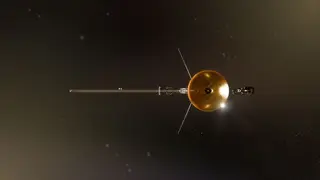
NASA's Voyager 1 spacecraft, launched in 1977, is approaching a distance of one light-day—nearly 26 billion kilometers—from Earth, marking a significant milestone in its 49-year deep-space mission. The probe, which became the first human-made object to enter interstellar space in 2012, continues to send data despite aging systems and intermittent communication issues. Its journey celebrates a half-century of exploration beyond our solar system.
On November 18, 2026, at 5:16 A.M. EST (2:16 A.M. PST), NASA’s Voyager 1 spacecraft is set to reach a distance of one light-day from Earth—approximately 26 billion kilometers—marking a symbolic and scientific milestone in its 49-year journey since launch on September 5, 1977. The probe, which became the first human-made object to enter interstellar space in 2012, continues to transmit data despite aging systems and intermittent communication failures. In October 2026, a temporary loss of signal caused concern among mission team members at NASA’s Jet Propulsion Laboratory, particularly for Nicky Fox, head of the Science Mission Directorate, who likened the spacecraft's daily data transmissions to “postcards home.” The glitch resolved itself after 48 hours, highlighting the resilience of the aging craft and the expertise of its engineering team. Only two of Voyager 1’s original ten instruments remain active due to power conservation, a deliberate strategy to extend mission life. Its sister spacecraft, Voyager 2—launched 16 days earlier—follows a different trajectory and is expected to reach one light-day in about nine years. The mission’s longevity reflects the foresight of its original team, including project manager John Casani, who emphasized designing for reliability rather than longevity. Now, with team members like William Kurth and Bhavana Gupta reflecting on decades of work, the milestone underscores both technological achievement and human dedication.
Voyager 1’s approach to one light-day may inspire renewed public interest in space exploration and long-duration missions, reinforcing the value of sustained scientific investment. The story resonates with audiences who view the Voyagers as cultural icons—especially due to the Golden Records, which carry humanity’s voice to potential extraterrestrial civilizations. This milestone could influence science education, encouraging students to pursue careers in aerospace engineering or astrophysics. Institutions like NASA and JPL may leverage the event to advocate for continued funding of deep-space missions, especially as newer probes face similar longevity challenges. Comparable to the Apollo program’s enduring legacy, Voyager’s journey exemplifies how early space efforts can yield long-term cultural and scientific dividends. While no immediate commercial or geopolitical shifts are expected, the mission’s endurance could shape future spacecraft design, emphasizing modular systems and remote diagnostics. What remains uncertain is whether Voyager 1 will remain operational beyond this milestone—its power levels are declining, and communication delays grow longer. The next phase may involve prioritizing data collection over transmission, potentially limiting real-time science returns. Still, the mission’s legacy as a testament to human ingenuity could endure far longer than its physical lifespan.