Poland Discovers Russian Missile Debris After Attack on Ukraine Spills Into Its Territory
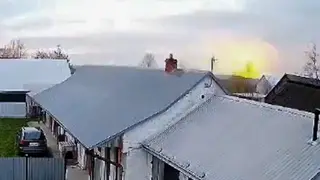
Polish authorities recovered debris from Kh-101 cruise missiles at three sites in eastern Poland following a Russian missile incursion during a large-scale attack on Ukraine. The missiles were traced to a Russian factory in Dubna and were launched during a coordinated assault. The incident prompted strong condemnation from Polish and NATO leaders, with NATO pledging continued support for Ukraine.
On the morning of November 20, 2026, three sites in eastern Poland—Nowy Lipowiec, Rudnik, and Mołodycz in Lublin District—were struck by debris from Russian Kh-101 cruise missiles during a large-scale attack on Ukraine. The missiles, traced to a factory in Dubna, Russia, were launched as part of a coordinated assault that also involved an unidentified object, likely a jet-powered drone or missile. Polish authorities confirmed the recovery of debris from all three locations, with investigations at Nowy Lipowiec and Rudnik concluded by November 22, and the Mołodycz site’s investigation set to conclude the following day. The incident marked a significant escalation, as it represented a direct breach of Polish airspace during a major Ukrainian strike, occurring amid NATO military exercises involving British and French forces in Poland. The Lublin District Prosecutor’s Office confirmed the missiles were manufactured recently, underscoring the ongoing production and deployment of advanced Russian weaponry.
The event triggered strong reactions from European and NATO leadership. Polish Defense Minister Władysław Kosiniak-Kamysz described the attack as one of the largest since the start of the full-scale war in Ukraine. NATO Secretary General Mark Rutte condemned the incident, reaffirming the alliance’s support for Ukraine. Meanwhile, a Swedish Air Force pilot flying a JAS 39 Gripen under NATO command was authorized to intercept a suspected missile over Poland but refrained due to severe weather preventing target identification. Ukrainian Foreign Minister Andrii Sybiha warned that Russia’s attacks on Ukraine threaten the broader European security order, criticizing Moscow’s simultaneous push for a “new security architecture” while undermining the current one. On November 21, Moldova and Finland also reported separate airspace violations by Russia, suggesting a broader pattern of incursions. The North Atlantic Council was scheduled to meet in Brussels on November 23 to discuss the Polish incident, with the potential for new defense or deterrence measures.
The discovery of Russian missile debris in Poland could heighten European anxiety over the war’s spillover into NATO territory, reinforcing fears that the conflict in Ukraine is no longer confined to Eastern Europe. While no casualties were reported, the incident may prompt a reevaluation of NATO’s air defense posture, particularly in eastern member states. The fact that a NATO pilot was authorized to engage but could not due to weather conditions highlights the operational challenges of real-time defense in contested airspace. This could lead to calls for improved surveillance, faster decision-making protocols, or enhanced joint military readiness across the alliance. Comparable to the 2014 downing of Malaysia Airlines Flight MH17 over eastern Ukraine—another incident that escalated tensions and prompted international condemnation—this event may serve as a catalyst for deeper integration of NATO’s collective defense mechanisms. The broader impact may extend beyond security policy. Financial markets could react to heightened geopolitical risk, especially in energy and defense sectors, while public opinion in neutral or non-aligned nations may shift toward greater support for Ukraine. The incident may also influence diplomatic efforts, with European leaders potentially pushing for more robust sanctions or military aid packages. What remains uncertain is whether NATO will formally invoke Article 5, which would treat the attack as an assault on all members—a move that could dramatically alter the conflict’s trajectory. For now, the focus remains on assessing the full scope of the breach and preparing for future contingencies.