Nala Renewables Partners with InCommodities for 125 MW Finnish Battery Storage Project
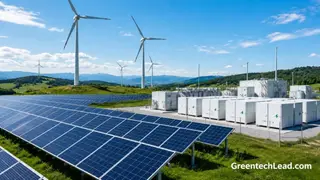
Nala Renewables has signed a seven-year revenue optimisation agreement with InCommodities Asset Management for a 125 MW/250 MWh battery storage facility in Finland. The project, which will provide two hours of electricity storage, will be commercially operated by InCommodities through its energy trading and asset management services. The agreement marks a key step in advancing grid-scale energy storage in the Nordic region.
Nala Renewables, a London-based renewable energy developer, has entered into a seven-year revenue optimisation agreement with InCommodities Asset Management, a Denmark-based energy trading and asset management firm, for a 125 MW/250 MWh battery storage facility in Finland. The project, announced on November 20, 2026, will provide two hours of electricity storage at full discharge capacity and is set to be commercially operated by InCommodities through its market participation and trading services. The agreement marks a strategic move to enhance grid stability and support renewable integration in the Nordic region, where variable wind and solar generation require scalable storage solutions. The facility will be part of Finland’s broader energy transition, contributing to national goals for decarbonisation and grid resilience.
The partnership reflects growing industry trends toward specialised asset management for storage projects, where developers focus on construction and financing while third parties manage market revenue streams. InCommodities’ expertise in energy trading and real-time market optimisation is key to maximising returns from the battery’s participation in electricity markets, including frequency regulation and peak shaving. Nala Renewables, though not detailed in the article beyond its role as project developer, likely seeks to de-risk its investment by offloading operational complexity. InCommodities, in turn, expands its portfolio of managed assets in the Nordic power market, strengthening its position in Europe’s emerging storage economy.
The outcome of the project’s performance over the seven-year term remains uncertain, as does the extent of regulatory or market changes that could affect revenue models. No details are provided on construction timelines, grid interconnection status, or environmental permitting. What is not yet known includes whether the battery will be co-located with renewable generation or operate independently, and how it may integrate with Finland’s broader energy infrastructure.
This project could strengthen Finland’s grid flexibility as renewable penetration increases, potentially reducing curtailment and enhancing energy security. By enabling longer-duration storage, the facility may help balance supply during periods of low wind or solar output, particularly in winter months. The involvement of InCommodities suggests a maturing market where financial and operational expertise is increasingly central to project viability—similar to how independent power producers (IPPs) evolved in the early 2000s. This model may encourage more developers to focus on asset creation while outsourcing revenue management to specialists, especially as storage becomes a standard component of energy systems. The broader implications extend to capital markets, where such partnerships may attract institutional investors seeking stable, long-term returns from grid infrastructure. If successful, this project could serve as a template for similar arrangements across Northern Europe. However, outcomes depend on evolving electricity market designs, regulatory frameworks, and the pace of renewable deployment. What to watch for includes how InCommodities’ optimisation strategies adapt to future market reforms, and whether other developers follow suit in outsourcing revenue management to asset managers.