Thawing Permafrost and Warming Temperatures Increase Likelihood of Devastating Landslides
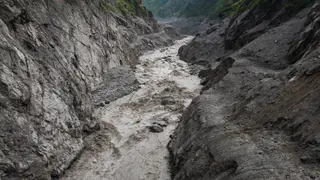
A massive debris avalanche in Nepal and Tibet, triggered by a landslide involving glacier ice, has killed more than a thousand people. Scientists say that rising global temperatures are thawing permafrost, which can destabilize mountain slopes and lead to more frequent and severe avalanches. The event serves as a warning that other mountainous regions may face similar risks.
The avalanche originated on Langtang Lirung and involved a glacier chunk, sending hundreds of millions of tons of ice, rock, and debris roughly 100 kilometers downslope. Many victims were workers inside hydroelectric tunnels, highlighting infrastructure vulnerability in high-altitude zones.
Geoscientist Regine Hock notes that thawing permafrost and shrinking glaciers weaken mountain stability worldwide. Similar conditions exist in South America, the Cascade Range, and Alaska. The 2025 Tracy Arm landslide in Alaska generated a nearly 500-meter tsunami but caused no casualties due to sparse population, illustrating how local factors shape outcomes.
This disaster could reshape how mountainous communities and governments assess risk, particularly for critical infrastructure like hydropower plants. Regions with steep slopes, thawing permafrost, and glacial retreat may face heightened danger, though predicting exact locations remains difficult. Early warning systems and land-use planning could mitigate harm, but remote, densely populated valleys may remain especially vulnerable. The event may also pressure researchers and agencies to prioritize monitoring of unstable slopes globally.