Nepal Floods Underscore Urgent Need for Cross-Border Cooperation
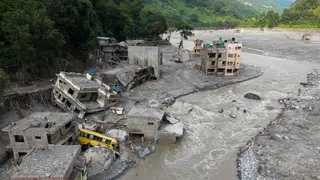
A week after catastrophic flooding triggered by a glacier collapse in Nepal, the death toll has surpassed 1,100 with thousands still missing, making it the country's deadliest natural disaster since the 2015 earthquake. The event underscores the necessity for Nepal and its neighbors to collaborate on disaster preparedness and climate adaptation. Experts argue that regional cooperation could reduce future threats from similar glacial and hydrological hazards.
The disaster was triggered by a glacier collapse and landslide along Nepal's border with Tibet, unleashing flash floods that devastated low-lying communities. With over 1,100 confirmed dead and nearly 4,000 missing, this ranks as Nepal's worst catastrophe since the 2015 earthquake claimed roughly 9,000 lives. Rescue operations continue as international aid arrives.
Nepal hosts the International Centre for Integrated Mountain Development, a regional body spanning eight Hindu Kush Himalaya nations including India, Pakistan, and China. ICIMOD has already launched coordinated glacier monitoring and community-level warning systems. The Indus Waters Treaty between India and Pakistan, despite India's recent suspension, demonstrates a proven information-sharing framework through periodic commissioner meetings that could inform similar cross-border disaster protocols.
This tragedy could reshape how South Asian governments approach shared environmental threats, potentially breaking longstanding diplomatic gridlock. If Nepal leverages its position as ICIMOD host, neighboring states may feel pressure to institutionalize early-warning systems and data exchange, benefiting millions in vulnerable mountain communities. However, political tensions could also stall meaningful progress, leaving disaster-prone regions exposed to increasingly frequent climate-driven events. The humanitarian scale may compel reluctant governments to prioritize practical cooperation over political differences.