Small Spotted Cat from Bolivia Recognized as Distinct Species
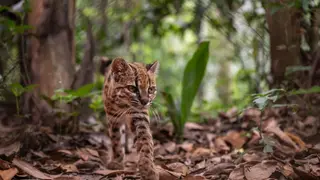
Researchers have identified a new species of small wildcat in Bolivia's cloud forest, named Leopardus tilcayo. The cat, known locally as the tilcayo, is smaller than a house cat and has leopard-like spots. Genetic analysis of 38 cats revealed it diverged from its closest relatives about 1.4 million years ago, making it the first new wildcat species described in over a century.
The tilcayo’s formal recognition stems from a chance encounter at a sanctuary, where a local man brought in one of the cats. Genetic work on 38 felines, including 26 from the Leopardus genus, revealed five distinct tiger cat species, with the tilcayo splitting from its nearest relative roughly 1.4 million years ago. This places its origin deep in the Pleistocene, long before modern human influence shaped the region. The species inhabits the Yungas cloud forests of Bolivia, a biodiversity hotspot that remains poorly surveyed. Researchers emphasize that the finding underscores how incomplete our catalog of mammalian life is, even for charismatic groups like wildcats, and they call for renewed conservation focus on these forest habitats.
This discovery may reshape conservation priorities, as the tilcayo’s limited known range could make it vulnerable to habitat loss from agriculture or development. For local communities, the species’ formal status could bring ecotourism interest or scientific attention, potentially aiding preservation of the Yungas forests. The finding also highlights how genetic tools can reveal hidden biodiversity, which may encourage similar surveys elsewhere. However, its impact depends on whether protective measures follow, as naming a species alone does not guarantee its survival.