Climate Scientist Michael Mann on the Risks of Exceeding the Paris Target
The United Nations warns that current climate policies could push global warming to at least 1.8 degrees Celsius, surpassing the Paris Agreement's 1.5-degree goal. This year's record heat waves and floods underscore the growing dangers, even as the Trump administration rolls back emissions regulations. Climate scientist Michael Mann discusses what these numbers mean for the planet's future.
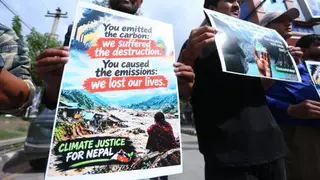
The UN's projection of 1.8 degrees Celsius warming reflects current policy trajectories rather than worst-case scenarios, yet it still exceeds the Paris Agreement's aspirational ceiling. Mann emphasizes that even sub-1.5-degree warming has already produced measurable consequences, including this year's European heat waves, Nepalese flooding, and the hottest July on record in the United States. His comparison of planetary warming to a human fever underscores how seemingly small temperature shifts can trigger cascading effects across natural and human systems. The Trump administration's regulatory rollbacks, which Mann cites as contributing to missed targets, add political dimension to what remains fundamentally a scientific and public health challenge.
This story could reshape public understanding of climate thresholds, moving the conversation from abstract temperature goals to tangible lived experience. Communities already facing extreme weather may find validation in Mann's framing, while policymakers could face increased pressure to reconcile stated commitments with actual emissions trajectories. The interview's timing, ahead of a UN summit, may amplify its influence on international negotiations and domestic political discourse, potentially affecting how voters evaluate climate action in upcoming election cycles.