Human brain may be fusion of two ancient nervous systems, Stanford research suggests
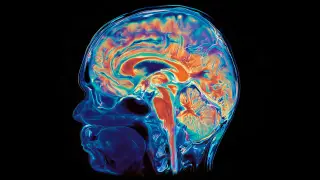
Researchers at Stanford Medicine found that the human brain develops from two distinct progenitor cell populations, one for the front and one for the back, challenging the long-held single-origin model. This discovery allowed them to grow hindbrain neurons in the lab, which could enable new studies of brainstem diseases like ALS and spinal muscular atrophy. The work suggests evolution fused two ancient nervous systems with different functions.
The study identifies two separate starting cell populations in early brain development, with the forebrain and hindbrain emerging from distinct origins. This contradicts the long-standing single-origin model that dominated neuroscience for decades. The hindbrain, or brain stem, manages automatic survival functions including breathing, heartbeat regulation, and sleep, while the forebrain supports language, consciousness, and abstract reasoning.
The team's success in cultivating hindbrain neurons in the laboratory addresses a persistent obstacle in neuroscience research. Previously, scientists struggled to grow these cells, limiting studies of brainstem disorders. SMA, a leading genetic cause of infant death, and ALS, which affects swallowing and breathing, both involve hindbrain neuron dysfunction. This new capability may enable more direct investigation of these conditions.
This discovery could reshape how researchers approach brainstem diseases like ALS and SMA, potentially accelerating drug development and treatment strategies. Patients and families affected by these conditions may benefit from improved laboratory models that better replicate human biology. The evolutionary perspective may also influence neuroscience education and research funding priorities, though clinical applications remain years away. Society could see earlier diagnoses or targeted therapies emerge, but these outcomes depend on further validation and translation of the findings.