Roman Telescope's First Glimpse Promises a New Era of Cosmic Discovery
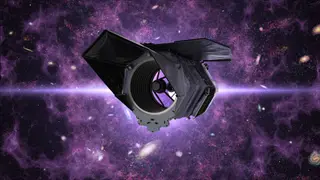
NASA's Nancy Grace Roman Space Telescope has captured its initial test images while traveling to Lagrange point L2, about a million miles from Earth. The 300-megapixel camera produced blurry rings of starlight that will sharpen once calibration is complete, enabling observations covering an area 100 times larger than Hubble's. Scientists anticipate using these images to investigate dark energy and search for signs of alien life.
The Roman Telescope's initial test images show hundreds of stars appearing as green rings, a direct result of its Wide Field Instrument not yet being fully focused. The telescope launched on Aug. 30 and is currently en route to Lagrange point L2, a stable orbital position roughly one million miles from Earth. Over the coming months, engineers will calibrate the instrument to achieve clarity comparable to Hubble's.
Once operational, Roman's 300-megapixel camera will capture views covering an area 100 times larger than Hubble's field of view. This expanded perspective is expected to support investigations into dark energy's possible source and the search for signs of alien life, making the telescope a significant tool for deep-space observation.
This telescope's wide-field capability could dramatically accelerate astronomical discovery, allowing researchers to survey vast regions of sky in a single observation. The potential to gather data on dark energy and exoplanets may reshape our understanding of cosmic expansion and habitability. Scientists and space agencies worldwide could benefit from the resulting data, while the public may gain unprecedented imagery that inspires broader interest in space science and exploration.