Youngest known exoplanet discovered still embedded in its star's disk
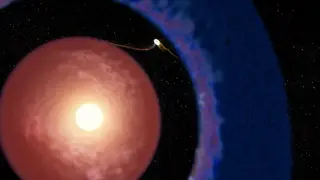
Astronomers have identified a planet less than a million years old, making it the youngest exoplanet found to date. The world, named Elias 2-24 b, is about twice Jupiter's mass and lies 450 light-years away, still surrounded by the dusty disk from which it formed. The discovery was led by a doctoral candidate at Universidad Diego Portales in Chile.
The discovery relied on archival data from the Keck Observatory's coronagraph, which blocks starlight to reveal fainter objects nearby. Researchers examined seven young stars with surrounding protoplanetary disks, searching specifically for gaps where forming planets should reside. Elias 2-24 b was found exactly in such a gap, which it carved through gravitational accumulation of surrounding material.
The finding challenges existing planet-formation models. Previous youngest-known planets, orbiting PDS 70 and WISPIT 2, were all over 5 million years old, and models already struggled to explain them. Elias 2-24 b's extreme youth suggests current theoretical frameworks are missing key processes in early planetary development.
This discovery could reshape how scientists understand planetary formation timelines, potentially influencing future telescope observation strategies and theoretical modeling. For the public, it offers a compelling glimpse into cosmic origins, reinforcing that planetary systems develop through dynamic, observable processes. Educational institutions and science communicators may use this finding to illustrate planetary evolution, while astronomers could refine search methods targeting younger systems, possibly accelerating future discoveries of infant worlds.