Astronomers Confirm Planet Less Than a Million Years Old
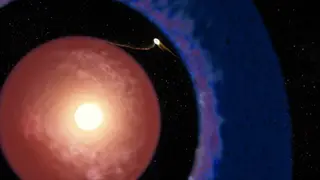
A newly confirmed exoplanet, Elias 2-24b, is estimated to be under 1 million years old, making it the youngest known. It orbits a young star in the Ophiuchus star-forming region and is still likely accreting mass from its protoplanetary disk. The discovery challenges existing planet-formation models and supports rapid core accretion.
The planet’s youth is tied to its host star’s age, with the entire system estimated at under a million years old. Its detection relied on a gap in the surrounding dust disk, first spotted by ALMA, then a faint light source seen by the Very Large Telescope, and finally confirmed by Keck’s vortex coronagraph. The planet’s mass, between 1.9 and 4 times Jupiter’s, comes from brightness and evolutionary models. Its presence in a narrow gap matches predictions of a growing world carving its orbit, supporting rapid core accretion over gravitational collapse.
The discovery pushes planet-formation timelines far earlier than previously observed. Earlier record holders, around PDS 70 and WISPIT 2, were all over 5 million years old, already straining models. Elias 2-24b, at less than a million years, shows that giant planets can assemble within the first few hundred thousand years of a star’s life. The authors note that current telescopes are near their limits, but upcoming instruments like the Nancy Grace Roman Space Telescope should make such detections more routine.
This finding may reshape how astronomers estimate the frequency and timing of planet formation across the galaxy. If young planets like Elias 2-24b are common, it could refine models used to predict where habitable worlds emerge, indirectly influencing future telescope targeting strategies. For the public, it underscores that planetary systems evolve rapidly, potentially altering expectations about how common early-stage worlds are. However, direct societal impact remains limited to scientific understanding, with broader applications likely decades away.