Genetic and fossil evidence traces bat origins to ancient Europe
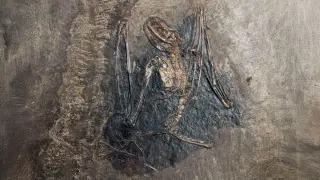
An international consortium of 137 researchers analyzed genomes from every living bat family alongside fossil evidence to determine that bats likely originated in Europe approximately 65 to 60 million years ago before dispersing across the globe. The comprehensive study found that flight and echolocation capabilities emerged early in bat evolution, characteristics that may have been crucial to their becoming one of Earth's most successful mammal groups. The research settled a long-standing debate among scientists about the geographic birthplace of these unique flying mammals.
The research drew on an unprecedented scale of genetic analysis, examining chromosome-level genome sequences from 103 bat species representing all 21 known families. This comprehensive molecular dataset was paired with paleontological records spanning 44 ancient bat specimens, allowing researchers to construct a detailed evolutionary timeline. The integration of these two distinct scientific approaches—modern genomics and fossilized remains—provided the strongest evidence yet for pinpointing where bats first emerged and how rapidly their characteristic abilities developed.
The early emergence of powered flight and echolocation proved critical to bat survival and diversification. These capabilities apparently arose during the initial stages of bat evolution in Europe, then facilitated their subsequent expansion into diverse habitats across Africa, Asia, the Americas, and Australia. Understanding when these traits evolved helps explain why bats now comprise roughly 20 percent of all living mammal species despite being the only mammals capable of sustained powered flight.
This research may enhance conservation strategies by clarifying bat evolutionary relationships and identifying vulnerabilities in different lineages. Understanding bat origins could inform disease research, as bats' unusual disease resistance remains medically significant. The findings may also influence biogeographic studies and paleoclimate reconstruction efforts. Additionally, the collaborative Bat1K consortium model could establish frameworks for international scientific cooperation on other complex genetic projects, potentially accelerating answers to other fundamental biological questions.