India advances massive renewable infrastructure while Actis launches new platform targeting 3 GW capacity
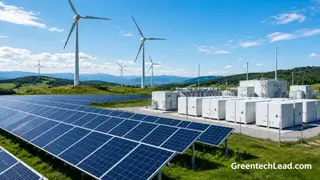
India's government approved a €1.86 lakh crore investment in Green Energy Corridor Phase III to support 135 GW of renewable capacity and 50 GWh of battery storage by 2032-33, bolstering its pathway toward 900 GW of non-fossil generation by 2035. Actis launched Leo Energies as its fourth renewable platform in India, targeting over 3 GW of solar, wind and storage capacity after acquiring approximately 650 MWp of existing solar assets. KPI Green Energy agreed to purchase 507.9 MW of operational wind farms in Gujarat with long-term power contracts containing approximately 21 years of remaining life.
India's renewable energy strategy combines large-scale transmission infrastructure with energy storage deployment to handle increasing clean power generation. The Green Energy Corridor Phase III represents a coordinated approach to grid modernization, with roughly 73 percent of funding directed toward state-level transmission networks and the remainder supporting battery storage systems. This investment framework supports India's decade-long pathway to achieve substantial renewable capacity additions while maintaining grid stability through enhanced storage capabilities.
Private sector participation is accelerating renewable asset consolidation through major acquisitions. Investment platforms like Actis are systematically building portfolios of operational generation assets with established power purchase agreements, reducing development risk. Meanwhile, operators like KPI Green Energy are acquiring mature wind farms with extended contract durations, stabilizing revenue streams while expanding overall generation capacity in India's renewable sector.
These developments could strengthen India's energy security by diversifying electricity sources and reducing fossil fuel dependence. Investors and grid operators may benefit from clearer transmission pathways and standardized operational frameworks. However, the timeline through 2032-33 reflects significant execution challenges across multiple states and private entities. Communities in renewable-rich regions may experience land-use changes, while energy consumers could potentially see effects on electricity pricing and reliability as the grid integrates higher renewable penetration levels.