India's offshore wind sector requires specialized turbine components to harness marine potential
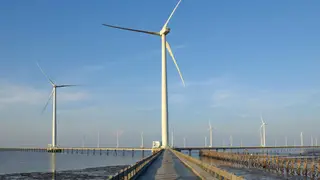
India is developing its first offshore wind projects to expand renewable capacity, leveraging its extensive coastline and strong wind resources at sea. Offshore turbines require significantly larger components than onshore systems, including blades of 100-120 meters length made from composite materials, alongside specialized foundations, subsea cabling, and marine infrastructure designed to withstand harsh ocean conditions. The industry must develop manufacturing capabilities across multiple sectors and explore modular blade designs and recyclable materials to address production and end-of-life challenges.
India's transition into offshore wind represents a significant expansion of its renewable energy strategy beyond the onshore sector that has dominated the country's wind development to date. The marine environment presents distinct technical demands: turbines operating at sea must be substantially larger to capture stronger, more stable winds, with blade lengths nearly double those of land-based systems. This scale advantage comes paired with considerable manufacturing obstacles, as producing, transporting, and installing such massive components requires infrastructure and expertise India's wind sector is still developing.
The industry faces interconnected challenges spanning multiple disciplines. Beyond the turbines themselves, successful offshore deployment demands advances in marine foundations, underwater electrical systems, corrosion management, and specialized vessels for installation and maintenance. Current global approaches—including segmented blade designs and direct-drive generator systems—offer potential pathways, though each introduces its own manufacturing complexity. India must simultaneously build capacity across these diverse technical domains while addressing lifecycle concerns, particularly the eventual recycling or disposal of composite materials that have no established end-of-life infrastructure in the country.
Successful offshore wind development could substantially expand India's renewable capacity and support climate commitments, while potentially creating manufacturing and skilled employment opportunities across coastal regions. However, the capital requirements and technical complexity may initially concentrate benefits among larger industrial players and multinational developers. Communities near project sites could experience environmental and livelihood impacts, while the supply chain development might strengthen India's engineering sector more broadly. The outcome will likely depend on how effectively policy, investment, and workforce training align with the sector's technical requirements.