Competing Strategies: China's Scale Advantage Versus Europe's Efficiency in Offshore Wind
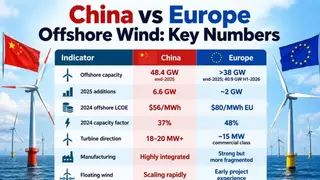
China dominates offshore wind deployment with 48.4 GW of installed capacity—over half the global total—driven by rapid construction, integrated manufacturing, and cost advantages around 30% lower than European projects. Europe maintains competitive strengths in energy yield per megawatt, offshore engineering expertise, and floating wind technology despite more fragmented development across multiple countries and regulatory frameworks. The global offshore wind sector totaled 92.5 GW by end of 2025, with the competitive dynamic shaped by turbine scale, supply chains, and industrial policy differences between the two regions.
China's offshore wind sector benefits from a vertically integrated supply chain that spans turbine manufacturing through installation services, allowing continuous cost reduction and technological refinement across the entire value chain. This domestic ecosystem has enabled Chinese producers to achieve turbine prices roughly one-fifth those available elsewhere, a gap that reflects manufacturing scale and labor cost differences rather than identical product comparisons.
Europe's fragmented development across multiple national jurisdictions with distinct permitting processes and grid infrastructure presents structural challenges to rapid capacity expansion. However, this regional diversity correlates with superior wind resources—European offshore sites produce electricity at rates roughly 11 percentage points higher than Chinese locations, potentially offsetting cost disadvantages over a project's operational lifetime.
The competing offshore wind models could shape global energy transition pathways and industrial competitiveness through the 2030s. Developing nations may face choice between pursuing lower-cost Chinese turbine technology versus European efficiency-optimized approaches, affecting long-term energy costs and climate targets. Supply chain dependencies and manufacturing capacity in both regions could influence equipment availability, project timelines, and investment patterns for expanding offshore wind capacity globally, particularly in emerging maritime markets.