SpaceX Achieves Record Four-Booster Recovery in Single Day with First NRO Falcon Heavy Launch
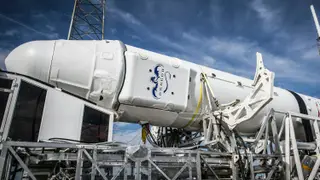
SpaceX launched Falcon Heavy with a classified National Reconnaissance Office payload from Kennedy Space Center on October 1, marking the first NRO mission on the triple-core rocket after 22 flights on Falcon 9. The mission's side boosters landed successfully at Cape Canaveral, contributing to SpaceX's achievement of recovering four boosters in a single calendar day. Separately, Rocket Lab secured a 20-mission contract with Japan's Synspective to deploy radar satellites, extending their partnership.
SpaceX's October 1 achievement represents a significant operational milestone in rocket reusability. The Falcon Heavy mission introduced the National Reconnaissance Office's classified surveillance payload to the company's most powerful launch vehicle after two decades of NRO reliance on the smaller Falcon 9 platform. The rapid 32-day turnaround between consecutive Falcon Heavy flights demonstrates advancing maintenance and logistics capabilities that could accelerate launch cadence for future national security missions.
Separately, Rocket Lab's expanding partnership with Synspective underscores growing commercial demand for dedicated small-satellite launch services. The Japanese earth-observation company's selection of 20 additional Electron missions reflects confidence in the provider's reliability and cost structure for constellation deployment, a market segment increasingly attractive to space startups seeking predictable revenue streams.
These developments may influence U.S. national security infrastructure by increasing launch capacity for reconnaissance operations while reducing dependency on single-vehicle platforms. Internationally, Rocket Lab's growth could reshape competitive dynamics in dedicated launch services, potentially affecting how commercial and government entities worldwide approach satellite deployment timelines and costs. The emphasis on booster reusability may drive broader industry adoption of recovery technologies, influencing future spacecraft economics.